Affiliate disclosure: MowScout may earn a commission when you buy through our links. Recommendations are based on yard fit, verified specs, and score methodology; commission can only break close ties among genuine fits.
Husqvarna Automower 430X vs Segway Navimow X350 (2026): wired vs wire-free
This is the classic "upgrade or switch" decision in robot mowing: the mature, wired machine that built the category against the modern, wire-free machine that's redefining it. The Husqvarna Automower 430X — MowScout Score 62 — is the proven veteran: a boundary-wire mower with the longest reliability record and the strongest dealer-support network of anything we track, at a lower price. The Segway Navimow X350 — Score 85 — is the large-lot newcomer: no buried wire, all-wheel drive, up to 1.5 acres of capacity, and hybrid vision-plus-GPS navigation. One asks you to trench copper once and trusts a decade of reliability; the other asks you to trust newer software and reserve a clear-sky spot. The right answer is entirely about what you value — and how your yard is shaped.
This comparison is spec-verified and data-driven, not hands-on. Every figure below comes from published manufacturer specifications and verified US pricing, cross-checked against retailer listings and captured in the MowScout Score — we have not run either unit across your lawn, and we say so plainly. There are no fabricated field tests, timing runs, or photos here. Prices are street estimates as of mid-2026; confirm the current price before you buy, because this category discounts weekly. For the navigation background, start with the pillar, Robot lawn mowers: RTK vs LiDAR vs vision, or jump straight to the 60-second configurator.
Quick verdict: which one should you buy?
Buy the Husqvarna Automower 430X if you value proven reliability and don't mind a wire. It has the longest reliability track record of any mower here, backed by a real Husqvarna dealer network for service, parts, and installation. It's about $800 cheaper (roughly $1,999 vs $2,799), it cuts lower (down to 0.8 in) for short, fine, cool-season turf, and it runs a touch quieter. The trade-offs are real: it needs a buried boundary wire, it's rear-wheel drive, it tops out at 0.8 acres, and its obstacle handling is basic rather than AI vision.
Buy the Segway Navimow X350 if you want a big, wire-free lawn done the modern way. It skips the boundary wire entirely, covers up to 1.5 acres on all-wheel drive, climbs a slightly steeper 50% grade, and adds AI-vision obstacle avoidance and a higher MowScout Score. The trade-offs: it's pricier at about $2,799, its track record is newer, and its hybrid vision-plus-GPS navigation needs a clear-sky antenna — under heavy tree canopy the satellite fix weakens.
In one line: 430X = proven, cheaper, dealer-backed, lower cut — but wired, smaller, and RWD; X350 = wire-free, bigger, AWD, higher score — but pricier, newer, and sky-dependent.
At-a-glance comparison
Husqvarna Automower 430X
Segway Navimow X350
MowScout Score
62
85
Street price*
~$1,999
~$2,799
Max area
0.8 acres
1.5 acres
Slope rating
45%
50%
Drivetrain
RWD
AWD
Navigation
Boundary wire + GPS tracking
Wire-free hybrid (vision + GPS)
Boundary wire needed
Yes
No
Warranty
2 years
2 years
\*Street estimates as of mid-2026 — verify before purchase.
Meet the two mowers
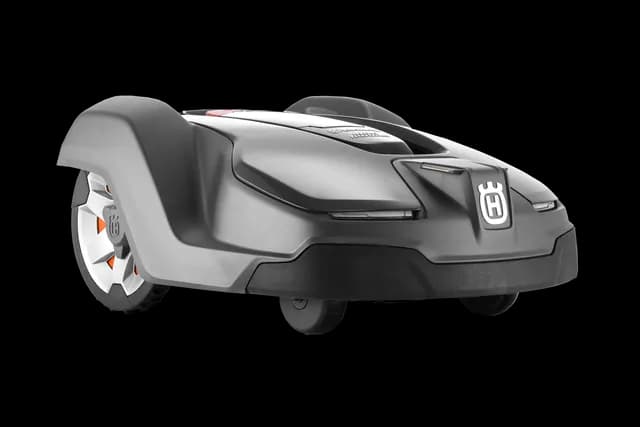
Husqvarna Automower 430X robot lawn mower
The Husqvarna Automower 430X is the mature benchmark of the category — the machine reliability comparisons are still measured against. It navigates with a buried perimeter (boundary) wire plus a guide wire, covers up to 0.8 acres (both max area and daily coverage, so it keeps pace with growth rather than falling behind), and manages up to 5 zones. It's rear-wheel drive rated to a 45% slope, cuts a wide range from a low 0.8 in up to 2.4 in on a 9.45-inch deck — that low floor suits short, fine, cool-season lawns better than almost anything wire-free — and runs quiet at about 58 dB. It includes GPS theft tracking and anti-theft (via Automower Connect) plus Wi-Fi, Bluetooth, and 4G, weighs a manageable 29 lb, and — critically — is sold and serviced through the Husqvarna dealer network with a standard 2-year warranty. Its limits are its age: obstacle handling is basic (contact-based, not AI vision), edges are rated "ok," and it still requires that boundary-wire install. Street price is about $1,999. Read the full Automower 430X review.
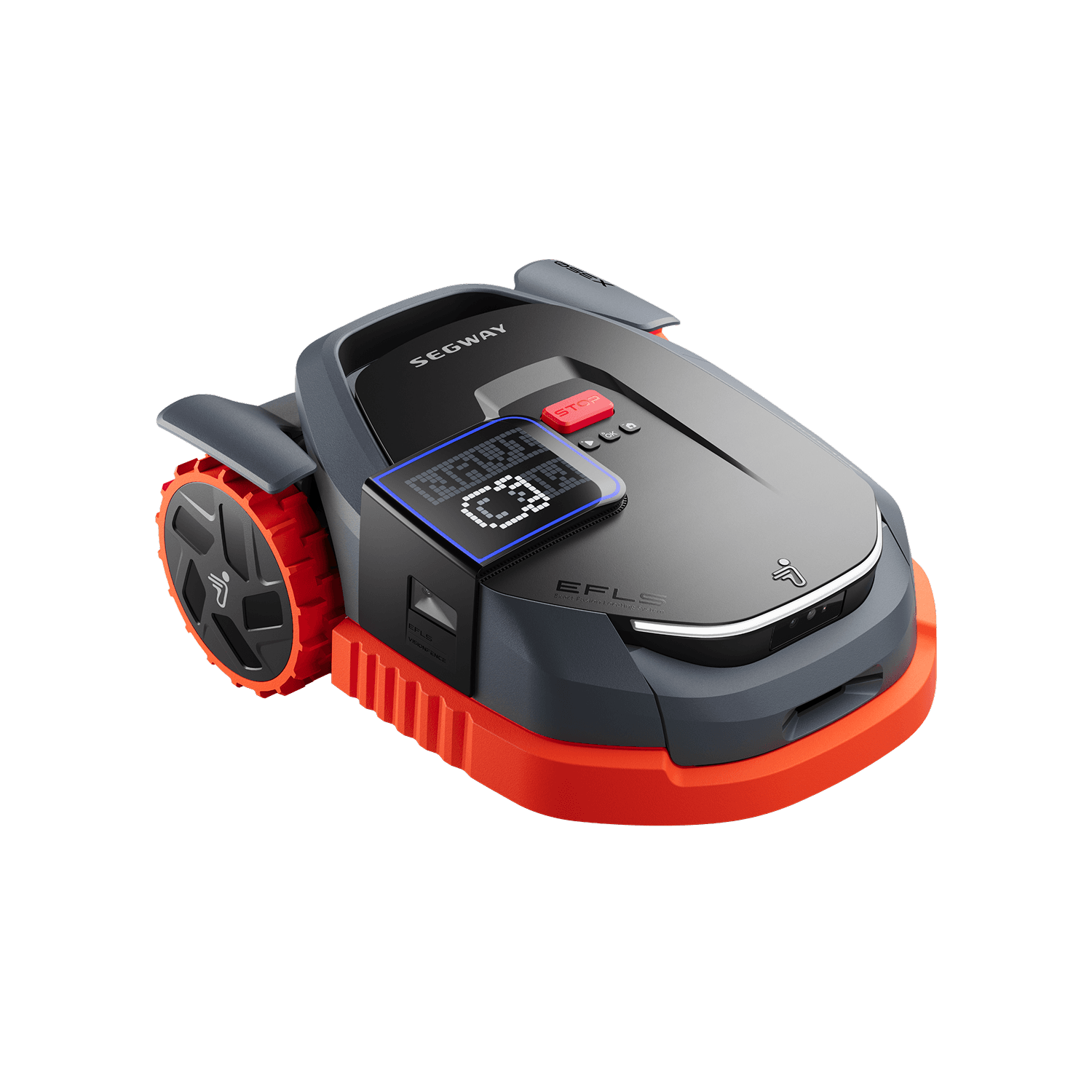
Segway Navimow X350 robot lawn mower
The Segway Navimow X350 is Navimow's large-lot workhorse, built to cover ground without a wire. It's rated to a class-leading 1.5 acres of max area on all-wheel drive, runs quiet at about 60 dB, and uses hybrid navigation that fuses AI vision with GPS/satellite positioning for night-capable, efficient mowing across open lawns. It maps up to 12 zones, cuts 2.0–4.0 inches on a 12-inch deck, adds AI-vision obstacle avoidance, and includes anti-theft with GPS tracking plus Wi-Fi, Bluetooth, and 4G. The trade-offs are sky and track record: it's rated to a 50% slope (moderate-to-steep), edge cutting is "ok," and it needs a clear-sky antenna position — under dense tree cover its satellite fix degrades. Its daily coverage is rated at 1 acre, so a full 1.5-acre lawn may run past a single cycle. Street price is about $2,799, and it carries a 2-year warranty. Read the full Navimow X350 review.
Wire vs wire-free: the install decision
This is the headline split, and for many buyers it decides everything. The 430X needs a physical boundary wire; the X350 does not. Everything else — capacity, drivetrain, price — sits downstream of that one difference in philosophy.
Installing the 430X means laying a loop of boundary wire around the entire lawn and around every bed, tree ring, or pond you want excluded, plus a guide wire back to the charging station. You can stake it to the surface (the grass grows over it) or trench it, and many owners have a Husqvarna dealer do it — one of the genuine advantages of buying into a supported platform. Done once, it's rock-solid: the wire physically defines the boundary, so there's no drift and no sky dependence. The cost is the labor up front, and the friction shows up again whenever your yard changes. Add a new flowerbed, move a play set, or plant a tree, and you may have to dig up and re-route wire to update the boundary.
The X350 replaces all of that with software. There's no wire to bury — you drive a mapping pass and draw your boundaries and no-go zones in the app. When your yard changes, you just edit the map on your phone; no digging. That flexibility is exactly why the category has moved this direction, and why the X350 earns a place in our best wire-free robot mowers guide. But wire-free isn't hardware-free: the X350 needs an antenna mounted where it can see open sky, and get that placement wrong and its positioning drifts. So the honest framing isn't "wire vs no setup" — it's "install a wire once, or reserve a clear-sky spot and trust the software." If you never want to touch a wire again, the X350 wins this outright. If a one-time, dealer-installable wire doesn't bother you, it stops being a deal-breaker.
Navigation: boundary wire + GPS vs hybrid vision + GPS
It's worth being precise about what "GPS" means on each mower, because both list it and they use it completely differently. Our full explainer lives in RTK vs LiDAR vs vision; here's the head-to-head.
The 430X navigates by the boundary wire. The wire is the boundary — the mower senses the signal in the loop and stays inside it, mowing in an efficient pattern and following the guide wire home to charge. Its GPS is for theft tracking and anti-theft, not for finding the edge of your lawn. That distinction matters: because the wire does the navigating, the 430X doesn't depend on the sky at all. It works exactly as well under dense tree canopy as it does in an open field — a real, underrated advantage for shaded lots that trip up satellite systems.
The X350 navigates by fusing AI vision with GPS/satellite positioning. On an open lawn this is fast, efficient, and night-capable. But the system wants a clear view of the sky and needs an antenna placed where it can hold a solid satellite fix. Its failure mode is exactly the 430X's strength — under heavy tree canopy the fix weakens and the X350 can drift or stall. In exchange, it brings AI-vision obstacle avoidance: it can see and steer around pets, toys, and hoses, where the 430X uses basic contact-based obstacle handling (it bumps, then turns).
The rule: pick by sky and obstacles. A heavily wooded, shaded lot actually favors the wired 430X, because the wire ignores canopy entirely. A big open lawn where you want modern obstacle avoidance and no wire favors the X350's hybrid vision. Neither is universally "smarter" — they're smart about different things.
Terrain and slopes: RWD 45% vs AWD 50%
Both of these are respectable hill mowers by the standards of the class, but the X350 has the edge on two counts. The 430X is rear-wheel drive rated to a 45% grade (about 24°). The X350 is all-wheel drive rated to 50% (about 27°). The rating gap is modest — five percentage points — but the drivetrain gap matters more.
Rear-wheel drive is perfectly capable on flat-to-moderate ground and gentle slopes, and the 430X has earned a good reputation on hills over many seasons. But on slick uphill starts, wet grass, or loose ground, an RWD mower can spin its drive wheels where an AWD machine keeps climbing. The X350's all-wheel drive puts torque to every wheel, giving it more real-world margin near the top of its rating. Remember, too, that every slope number here is a dry-condition rating — wet grass, dew, and clippings lower the true ceiling for both, so leave 10–20% of headroom over your measured grade. That headroom is easier to find on the AWD X350.
For a lawn with meaningful banks or terraces, the X350 is the more confident climber, and it earns its place among steeper picks in our rankings. If your slopes are gentle and your priority is reliability, the 430X's 45% RWD rating is still plenty for most suburban yards. Either way, measure your steepest grade before you buy — slope is the spec buyers most often get wrong.
Capacity and coverage: 0.8 vs 1.5 acres
If your defining constraint is size, the X350 wins as clearly as anything in this comparison. The X350 is rated to 1.5 acres of max area — nearly double the 430X's 0.8 acres. For a large property, that's the difference between one mower finishing the job and another falling behind.
One honest nuance the spec sheet rewards reading closely: the X350's daily coverage is rated at 1 acre, not the full 1.5. Max area is how much lawn it can map and manage; daily coverage is how much it can actually mow in a normal cycle. So a true 1.5-acre lawn may take the X350 more than one day per pass — still far more ground than the 430X can touch, but plan for a longer cycle at the top of its range. The 430X, by contrast, matches its numbers: 0.8 acres of both max area and daily coverage, so within its smaller footprint it keeps pace with growth cleanly.
Apply the 15% headroom rule — buy a rating meaningfully above your measured lawn to absorb slopes, obstacles, and thick spring growth — and the split is clear:
A 1.25-acre lawn → only the X350 (1.5 ac max) reaches it; the 430X (0.8 ac) can't come close.
A 1-acre lawn → the X350 covers it (at its full daily-coverage rating); the 430X is over its limit.
A 0.6-acre lawn → both clear it comfortably, and the decision returns to wire, drivetrain, and price rather than raw size.
For a big or multi-area property, see our full best robot mowers for large yards guide, where the X350's capacity earns it a place. The X350 also maps more zones (12 vs the 430X's 5), which helps a segmented lawn — but zones don't add acres. If you simply have a lot of grass, the X350 is the mower with room to cover it; if your lawn is under about 0.8 acres, the 430X's smaller capacity is a non-issue.
Reliability and support vs modern features
Here's where the 430X pushes back. This is the mower with the deepest reliability record in the category — years of real-world seasons behind the Automower platform — and it's backed by a Husqvarna dealer network that can sell, install, service, and stock parts for it. If you want a professional to bury the wire, hand you a working mower, and be there when something needs a repair, that support ecosystem is a genuine, hard-to-quantify advantage that a newer wire-free brand can't fully match yet. Both carry a standard 2-year warranty, so it's the dealer and service ecosystem — not warranty length — that sets the 430X apart here.
The X350 answers with modern capability instead of tenure. It's wire-free, drives all four wheels, covers nearly double the area, and brings AI-vision obstacle avoidance the 430X lacks. Its MowScout Score of 85 versus the 430X's 62 reflects exactly this: on paper, the X350 is the more capable, more future-proof machine. What it can't offer is a decade of proven service history or a coast-to-coast dealer bench — it's the newer track record, and that's the honest trade for its modern feature set.
So the choice in this section is a values question, not a spec question. Weigh proven reliability and dealer service (430X) against wire-free convenience, more capacity, AWD, and smarter obstacle handling (X350). Buyers who prize brand trust and local support lean 430X; buyers who prize the modern feature set lean X350.
Value and cost of ownership
At street prices, the 430X is about $1,999 and the X350 about $2,799 — roughly an $800 gap in the 430X's favor (both verify before buying; MSRPs are higher at $2,199 and $3,499 respectively, and the X350 typically carries the larger discount off list). Both carry a standard 2-year warranty, so ownership cost comes down to price, setup, and capability rather than coverage length.
But price alone doesn't settle value — capability you'll actually use does. The 430X's $800 saving is real money, and if your lawn is under 0.8 acres, flat-to-moderate, and you're comfortable with a wire, you're not paying for capacity or a drivetrain you don't need. On a large or steep lot, though, the 430X simply can't do the job at any price, and the X350's extra spend buys the acres and the all-wheel traction that finish it. There's also a setup cost to factor for the 430X — either your labor or a dealer's fee to install the boundary wire — that the X350 avoids. And factor the friction of change: every time you re-landscape, the wired mower may cost you an afternoon of re-routing, while the X350 costs a two-minute app edit. The X350's higher MowScout Score reflects greater all-around capability, not that it's the right buy for every yard — an 85 you've oversized for a small flat lawn is worse value than a 62 that fits it and saves you $800.
Choose the Husqvarna Automower 430X if…
You value a long, proven reliability record over the newest feature set.
You want dealer support — installation, service, parts — from a nationwide network.
You're comfortable with a boundary wire (or happy to have a dealer install it).
Your lawn is up to 0.8 acres with slopes to 45%, so you won't miss the extra capacity.
You keep short, fine, cool-season turf and want a low 0.8-in cut floor.
You want to spend about $800 less and don't need AWD or AI-vision obstacle avoidance.
Choose the Segway Navimow X350 if…
You want a wire-free setup with no buried wire to install or re-route.
Your lawn is large — up to 1.5 acres — with a clear-sky antenna spot.
You want all-wheel drive and a slightly steeper 50% slope rating.
You value AI-vision obstacle avoidance and a higher MowScout Score.
Your yard changes often and you'd rather edit a map than dig up copper.
You keep warm-season grass taller (2.0–4.0 in) and want night-capable mowing.
Full spec comparison
Every figure is a manufacturer rating verified against a retail listing, paired with the MowScout Score. Prices are street estimates as of mid-2026 — verify before buying.
Spec
Husqvarna Automower 430X
Segway Navimow X350
MowScout Score
62
85
Street price*
~$1,999
~$2,799
MSRP
$2,199
$3,499
Max area
0.8 acres
1.5 acres
Daily coverage
0.8 acres
1 acre
Slope rating
45%
50%
Drivetrain
RWD
AWD
Navigation
Boundary wire + GPS tracking
Hybrid (vision + GPS)
Boundary wire needed
Yes
No
Antenna needed
No
Clear-sky spot
Multi-zone count
5
12
Cut width
9.45 in
12 in
Cut height
0.8–2.4 in
2.0–4.0 in
Edge cutting
OK
OK
Obstacle avoidance
Basic (contact)
AI vision
Anti-theft / GPS
Yes / Yes
Yes / Yes
Wet-grass rated
Yes
Yes
Noise
~58 dB
~60 dB
Weight
29 lb
Not published
Connectivity
Wi-Fi, BT, 4G
Wi-Fi, BT, 4G
App quality
4 / 5
4 / 5
Warranty
2 years
2 years
\*Street estimates as of mid-2026 — verify before purchase.
Frequently asked questions
Which is better overall, the Husqvarna Automower 430X or the Segway Navimow X350? By our scoring, the Segway Navimow X350 wins clearly — a MowScout Score of 85 versus 62 for the Husqvarna Automower 430X. The X350 covers far more ground (1.5 vs 0.8 acres), drives all four wheels, and skips the boundary wire entirely with hybrid vision-plus-GPS navigation. But the 430X is about $800 cheaper (roughly $1,999 vs $2,799) and has the deepest reliability and dealer-support record of any mower we track. Buy the X350 for a big, open, wire-free lawn; buy the 430X if you value proven reliability and dealer service and don't mind a buried wire. Both prices are street estimates as of mid-2026 — verify before buying.
Do I really have to bury a wire for the Husqvarna 430X? Yes. The Automower 430X navigates with a buried or staked perimeter (boundary) wire that defines the mowable area, plus a guide wire back to the charging station. You install it once around the lawn and every bed, tree ring, or pond you want excluded. It's the single biggest setup difference between these two mowers: the X350 replaces that wire with software, so you draw boundaries in an app instead of trenching copper. The 430X does have GPS, but it uses it for theft tracking and anti-theft, not for navigation — the wire is what keeps it on the lawn.
Which one is better for a large yard? The Navimow X350, and it isn't close. It's rated to 1.5 acres of max area versus the 430X's 0.8 acres — nearly double. One honest caveat: the X350's daily coverage is rated at 1 acre, not the full 1.5, so a true 1.5-acre lawn may need more than a day per cycle. The 430X, by contrast, matches its numbers (0.8 acres of both max area and daily coverage) within its smaller footprint. For anything approaching an acre or more, the X350 is the capacity pick — see our best robot mowers for large yards guide.
Which handles slopes better, the 430X or the X350? Both handle real slopes, but the X350 has the edge. It's all-wheel drive rated to a 50% grade (about 27°); the 430X is rear-wheel drive rated to 45% (about 24°). The rating gap is modest, but the drivetrain gap matters more — AWD puts torque to every wheel, so the X350 has more margin on wet grass and loose ground, while the RWD 430X can lose traction on slick uphill starts. Both are respectable hill mowers by the standards of the class; if slope is your single hardest constraint, the X350 is the safer bet.
Is the Husqvarna 430X still worth buying in 2026? For the right buyer, yes. It's the mature, proven option: the longest reliability track record here and a strong Husqvarna dealer network for service and parts. It's also about $800 cheaper and cuts lower (0.8 in vs 2.0 in), which suits short, fine, cool-season turf. What it does not do is solve the no-wire problem most 2026 buyers now expect solved, and its obstacle handling is basic rather than AI vision. Buy it for brand trust, service, and a low cut — not because it's the most modern machine.
Which is easier to live with day to day? After setup, both are low-maintenance: they mow on a schedule, return to charge, and run quietly (about 58 dB for the 430X, 60 dB for the X350). The difference is what happens when your yard changes. Add a flowerbed or move a play set and the X350 just needs a quick edit in the app; the 430X may need you to dig up and re-route boundary wire. Both include app control, anti-theft, and GPS tracking. The X350 adds AI-vision obstacle avoidance, while the 430X uses basic contact-based obstacle handling.
Still deciding? Match it to your exact yard
The 430X and the X350 are built for different owners, and the right pick comes down to your area, slope, tree cover, tolerance for a wire, and budget — the exact variables this comparison walks through.
MowScout is reader-supported and may earn a commission from links on this page. Our picks are spec-verified and data-driven — based on published manufacturer specifications and verified US pricing, not hands-on lab testing. We have not physically tested these mowers; there are no fabricated measurements, timings, or photos on this page. Prices are street estimates as of mid-2026; always confirm the current price before buying. See our full disclosure.
Quick winner
Segway Navimow X350 leads this comparison.
The winner is based on current MowScout Score and the yard-fit specs that matter for Husqvarna Automower 430X vs Segway Navimow X350 (2026): spec-verified wired-vs-wire-free compare — Score 62 vs 85, boundary wire against 1.5-acre AWD.. That does not mean every buyer should choose it. A lower-scoring mower can still be the smarter purchase if it fits your lawn size, tree cover, slope, budget, or setup tolerance better. Treat this page as a structured decision guide, then run the configurator before buying.
The score gap is 23 points and the current street-price gap is $800. Those two numbers matter together. A small score gap with a large price gap may favor value; a large score gap may justify paying more if the added capability addresses your yard's hardest constraint.
The mature Automower platform remains a useful reliability comparison point for 0.8-acre wired installs.
Score62/100
It trails the comparison winner on the current score, but it can still be the smarter buy for the right lawn. For Husqvarna Automower 430X vs Segway Navimow X350 (2026): spec-verified wired-vs-wire-free compare — Score 62 vs 85, boundary wire against 1.5-acre AWD., the important specs are 0.8 acres of rated area, 45% slope support, WIRE navigation, RWD drive, and 5 supported zones. Because this model avoids an external antenna, the setup path may be easier for buyers who want fewer install variables. The practical question is whether those strengths solve your hardest yard constraint or simply add capability you will not use.
Covers up to 1.5 acres quickly and quietly (~60 dB) with AWD traction and night-capable vision.
Score85/100
It is the higher-scoring mower in this matchup, so buyers should start here when its strengths match the yard. For Husqvarna Automower 430X vs Segway Navimow X350 (2026): spec-verified wired-vs-wire-free compare — Score 62 vs 85, boundary wire against 1.5-acre AWD., the important specs are 1.5 acres of rated area, 50% slope support, HYBRID navigation, AWD drive, and 12 supported zones. Because this model depends on antenna or base placement, open sky and a thoughtful dock location matter more than they do on simpler vision or LiDAR-first systems. The practical question is whether those strengths solve your hardest yard constraint or simply add capability you will not use.
Specs do not replace yard fit, but they show which compromises are real. Pay special attention to the rows that match the constraint that brought you to this comparison.
Spec
Husqvarna Automower 430X
Segway Navimow X350
MowScout Score
62
85
Street price
$1,999
$2,799
Max area
0.8 acres
1.5 acres
Daily coverage
0.8 acres
1 acre
Max slope
45%
50%
Navigation
WIRE
HYBRID
Drive
RWD
AWD
Obstacle avoidance
basic
ai vision
Cut height
0.8-2.4 in
2-4 in
Cut width
9.45 in
12 in
Zones
5
12
Warranty
2 years
2 years
Where each mower wins
Segway Navimow X350 is the higher-scoring choice overall. It should be the first model you evaluate if the extra capability directly addresses your yard's limiting factor.
Husqvarna Automower 430X stays in the conversation when its price, setup path, navigation style, or size class better matches the lawn. A lower score is not an automatic rejection if the use case is narrower than the full MowScout formula.
The cheaper model is Husqvarna Automower 430X. The higher-capacity model is Segway Navimow X350. The stronger listed slope rating belongs to Segway Navimow X350. Those three checks often decide close comparisons faster than marketing claims.
Navigation and setup
Husqvarna Automower 430X uses WIRE navigation while Segway Navimow X350 uses HYBRID navigation. That difference matters most around trees, fences, houses, open-sky requirements, and the first mapping session. If your yard has heavy trees, enclosed side yards, or houses close to the boundary, do not buy only from a spec table. Read the robot lawn mower guide and run the configurator with your sky-view setting.
Terrain and cutting
Terrain is where paper winners can change. Husqvarna Automower 430X uses RWD drive and is rated for 45% slopes; Segway Navimow X350 uses AWD drive and is rated for 50% slopes. Also compare cut-height range, edge behavior, and whether the mower has enough weight and traction margin for wet turns or rooty turf.
Cost and ownership
Current street prices put Husqvarna Automower 430X at $1,999 and Segway Navimow X350 at $2,799. The purchase price is only the first line item. Add blades, dock protection, antenna hardware if required, battery risk, and the value of avoided mowing time in the five-year cost calculator.
Next checks
Use the table above to decide which mower fits on paper, then run the configurator with your actual acreage, slope, tree cover, zones, terrain, obstacles, and budget before opening a retailer page.
Which is better overall, the Husqvarna Automower 430X or the Segway Navimow X350?
By our scoring, the Segway Navimow X350 wins clearly — a MowScout Score of 85 versus 62 for the Husqvarna Automower 430X. The X350 covers far more ground (1.5 vs 0.8 acres), drives all four wheels, and skips the boundary wire entirely with hybrid vision-plus-GPS navigation. But the 430X is about $800 cheaper (roughly $1,999 vs $2,799) and has the deepest reliability and dealer-support record of any mower we track. Buy the X350 for a big, open, wire-free lawn; buy the 430X if you value proven reliability and dealer service and don't mind a buried wire. Both prices are street estimates as of mid-2026 — verify before buying.
Do I really have to bury a wire for the Husqvarna 430X?
Yes. The Automower 430X navigates with a buried or staked perimeter (boundary) wire that defines the mowable area, plus a guide wire back to the charging station. You install it once around the lawn and every bed, tree ring, or pond you want excluded. It's the single biggest setup difference between these two mowers: the X350 replaces that wire with software, so you draw boundaries in an app instead of trenching copper. The 430X does have GPS, but it uses it for theft tracking and anti-theft, not for navigation — the wire is what keeps it on the lawn.
Which one is better for a large yard?
The Navimow X350, and it isn't close. It's rated to 1.5 acres of max area versus the 430X's 0.8 acres — nearly double. One honest caveat: the X350's daily coverage is rated at 1 acre, not the full 1.5, so a true 1.5-acre lawn may need more than a day per cycle. The 430X, by contrast, matches its numbers (0.8 acres of both max area and daily coverage) within its smaller footprint. For anything approaching an acre or more, the X350 is the capacity pick — see our best robot mowers for large yards guide.
Which handles slopes better, the 430X or the X350?
Both handle real slopes, but the X350 has the edge. It's all-wheel drive rated to a 50% grade (about 27°); the 430X is rear-wheel drive rated to 45% (about 24°). The rating gap is modest, but the drivetrain gap matters more — AWD puts torque to every wheel, so the X350 has more margin on wet grass and loose ground, while the RWD 430X can lose traction on slick uphill starts. Both are respectable hill mowers by the standards of the class; if slope is your single hardest constraint, the X350 is the safer bet.
Is the Husqvarna 430X still worth buying in 2026?
For the right buyer, yes. It's the mature, proven option: the longest reliability track record here and a strong Husqvarna dealer network for service and parts. It's also about $800 cheaper and cuts lower (0.8 in vs 2.0 in), which suits short, fine, cool-season turf. What it does not do is solve the no-wire problem most 2026 buyers now expect solved, and its obstacle handling is basic rather than AI vision. Buy it for brand trust, service, and a low cut — not because it's the most modern machine.
Which is easier to live with day to day?
After setup, both are low-maintenance: they mow on a schedule, return to charge, and run quietly (about 58 dB for the 430X, 60 dB for the X350). The difference is what happens when your yard changes. Add a flowerbed or move a play set and the X350 just needs a quick edit in the app; the 430X may need you to dig up and re-route boundary wire. Both include app control, anti-theft, and GPS tracking. The X350 adds AI-vision obstacle avoidance, while the 430X uses basic contact-based obstacle handling.
Which is better: Husqvarna Automower 430X or Segway Navimow X350?
Segway Navimow X350 leads by current MowScout Score, but the better buy depends on your yard size, slope, tree cover, zones, and budget.
Is there one universal winner?
No. A mower can win this comparison overall but still be the wrong fit for dense trees, steep wet slopes, narrow passages, or a tight budget.
How is the winner chosen?
This page uses current MowScout Scores and key yard-fit specs. The configurator is more specific because it uses your yard inputs.
Should I buy from the deal box immediately?
Use the deal box after confirming fit. Prices and availability can change, so verify the current retailer page before purchase.