ECOVACS GOAT A3000 vs A2000 LiDAR Pro (2026): Which to Buy
ECOVACS GOAT A3000 vs A2000 LiDAR PRO (2026): both bring dual-LiDAR and TruEdge edges; the A3000 adds capacity, slope, and 4G. Spec-verified pick guide.
Affiliate disclosure: MowScout may earn a commission when you buy through our links. Recommendations are based on yard fit, verified specs, and score methodology; commission can only break close ties among genuine fits.
Quick verdict: buy the ECOVACS GOAT A3000 LiDAR PRO (MowScout Score 80, about $2,199) if your lawn is bigger than a half acre or you want a full day of coverage headroom; buy the GOAT A2000 LiDAR PRO (Score 76, about $1,699) if your yard is a half acre or less. These two are the same mower at two sizes — identical dual-LiDAR navigation, the same TruEdge edge trimmer, the same rear-wheel-drive chassis, the same cut heights and noise level. The $500 gap between them buys area capacity first and a handful of secondary upgrades second. This comparison is spec-verified and data-driven, not hands-on: we have not run either unit on your lawn, so every number here comes from ECOVACS' specs and our MowScout Score, and prices are street estimates as of mid-2026 that you should verify before buying.
If you want the wider context on how LiDAR mowers differ from RTK and vision systems, start with the pillar, robot lawn mowers: RTK vs LiDAR vs vision, then come back here for the head-to-head.
At a glance: A3000 vs A2000
Spec
GOAT A3000 LiDAR PRO
GOAT A2000 LiDAR PRO
MowScout Score
80
76
Street price*
~$2,199
~$1,699
Max area
0.75 acre
0.5 acre
Daily coverage
0.75 acre/day
0.5 acre/day
Max slope
50% (~27°)
45% (~24°)
Drivetrain
RWD
RWD
Navigation
Dual-LiDAR + AI vision
Dual-LiDAR + AI vision
Edge trimmer
TruEdge
TruEdge
Cutting width
13 in
11 in
Mapped zones
12
10
Connectivity
Wi-Fi, BT, 4G
Wi-Fi, BT
\*Street estimates as of mid-2026 — verify before purchase.
The pattern is clear in one glance: the A3000 wins on capacity, deck width, zones, slope, and connectivity, and the two are tied on everything about how the lawn actually looks when it's done. That is the whole decision in miniature — you are choosing how much yard you need to cover, not how good the cut will be.
ECOVACS GOAT A3000 LiDAR PRO
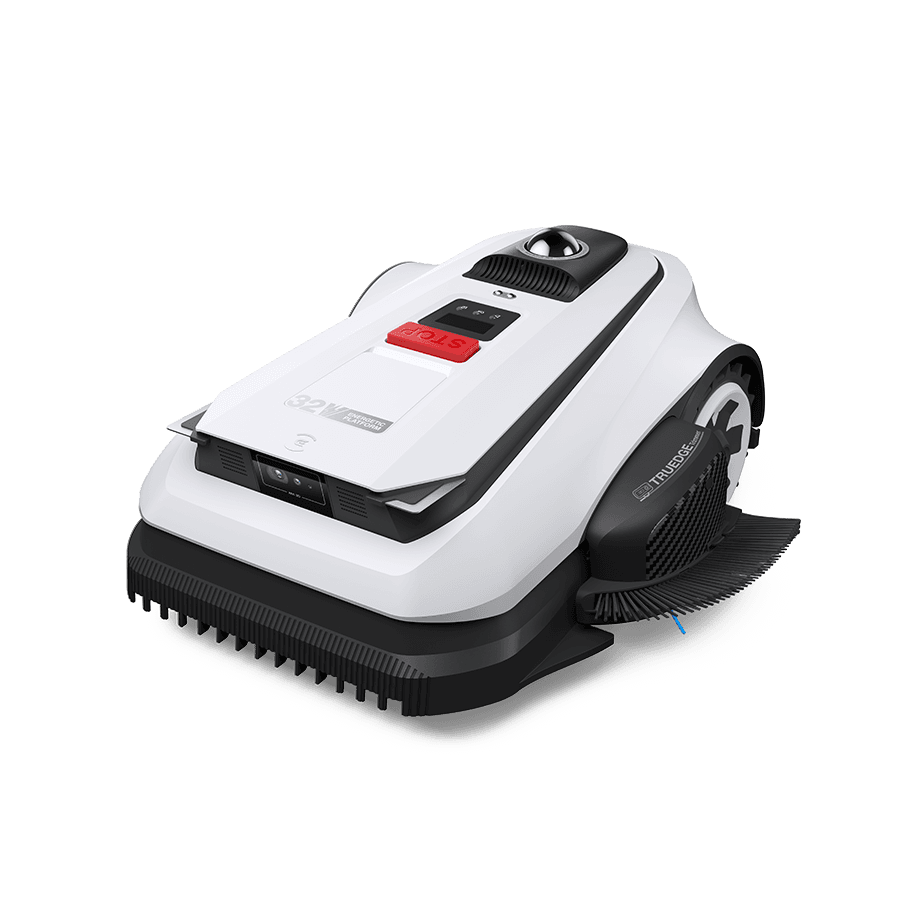
ECOVACS GOAT A3000 LiDAR PRO robot lawn mower
The A3000 is the larger, more capable of the pair and the one we'd point most buyers with real acreage toward. It pairs dual-LiDAR mapping with AI-vision obstacle avoidance, needs no antenna, and covers up to 0.75 acre across 12 mapped zones. Its standout trick is edge quality: the built-in TruEdge trimmer reaches toward the boundary so the mower gets closer to walls, beds, and fences than most robots, which is why our review calls it the precision edge-cutter for larger yards. The wider 13-inch deck finishes open ground faster, and onboard 4G means it can send theft alerts and status even off your home Wi-Fi. The one honest caveat is the drivetrain: it's rear-wheel drive, rated to a 50% slope, so it's a flat-to-moderate machine, not a hill climber. At about $2,199 it earns a MowScout Score of 80. Read the full A3000 review.
ECOVACS GOAT A2000 LiDAR PRO
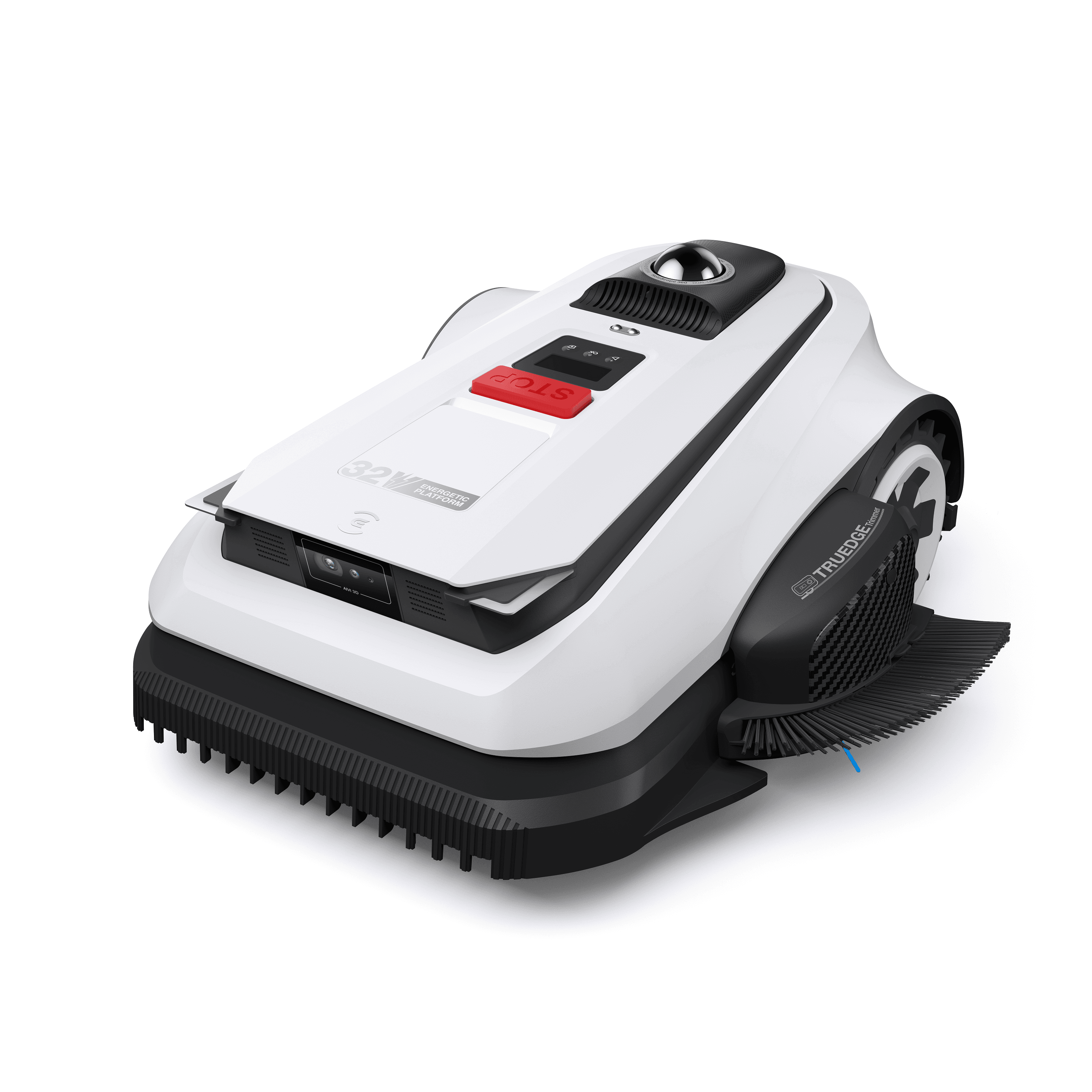
ECOVACS GOAT A2000 LiDAR PRO robot lawn mower
The A2000 is the half-acre value pick in ECOVACS' LiDAR Pro line — the same dual-LiDAR navigation and the same TruEdge edge trimmer as the A3000, scaled to a smaller yard for meaningfully less money. It covers up to 0.5 acre across 10 zones, uses an 11-inch deck, and like its bigger sibling needs no antenna and navigates fine under tree cover. It's also rear-wheel drive, with a slightly lower 45% slope ceiling, so the same flat-to-moderate rule applies. The two spec sacrifices versus the A3000 are area and connectivity: it tops out at half an acre and there's no 4G on the base configuration, so anti-theft alerts lean on Wi-Fi and Bluetooth. For a buyer who wants great edges and shade-proof navigation without paying for three-quarters of an acre, that's a fair trade. At about $1,699 it earns a MowScout Score of 76. Read the full A2000 review.
What's the same on both mowers
This is the part that makes the decision easy: almost everything you'd notice day to day is identical.
Dual-LiDAR navigation. Both map your yard with dual-LiDAR and steer with AI-vision obstacle avoidance. Neither needs an RTK antenna, and both hold position under tree cover where satellite-based mowers drift or stall — a core strength covered in depth on our best robot mowers for tree cover guide.
TruEdge edges. Both carry the TruEdge trimmer that reaches toward the boundary. We rate the edge cutting on both as "good," and it's the same mechanism — you do not pay the A3000 premium for cleaner borders.
Rear-wheel-drive limits. Both are RWD, flat-to-moderate machines. Neither is a slope specialist; the difference between their 45% and 50% ratings is minor next to the 80% AWD/4WD models on our hills guide.
Cut and comfort. Both cut from 1.18 to 3.15 inches tall, both run at about 60 dB, both are wire-free with a charging base station, both handle damp grass, and both carry a 2-year warranty with anti-theft and GPS locating.
In other words, whichever one you pick, the finished lawn — the stripe height, the edge quality, the shade tolerance, the noise — is the same. The choice is purely about scale.
What actually differs
Five specs separate the two, and only the first one changes the buying decision for most people.
1. Area capacity — the headline. The A3000 covers up to 0.75 acre per day; the A2000 covers up to 0.5 acre. That 0.25-acre gap is what the $500 mostly pays for. If your lawn is over a half acre, the A2000 simply can't keep up in a day; if it's under, the A3000's extra range sits idle.
2. Slope rating. The A3000 is rated to 50% grade, the A2000 to 45%. Both are dry-condition ceilings, both drop on wet grass, and both are still RWD — so this is a tie-breaker at the margins, not a reason on its own. If 45% versus 50% matters to your yard, you're close to the point where you should be looking at AWD instead.
3. Deck width. The A3000's 13-inch deck versus the A2000's 11-inch deck means the bigger mower takes fewer passes to cover open ground, which compounds with its larger battery to deliver the higher daily coverage. On a small lawn you won't notice; on a large one it's part of why the A3000 finishes.
4. Connectivity and theft protection. The A3000 adds 4G on top of Wi-Fi and Bluetooth, so it can send alerts and locate itself away from your home network. The A2000 relies on Wi-Fi and Bluetooth. Both have anti-theft and GPS features, but the A3000's cellular link is the more robust of the two.
5. Zones and battery/runtime. The A3000 manages 12 mapped zones to the A2000's 10, and its larger battery underpins the extra daily coverage. For a multi-area property the two extra zones add flexibility; for a single open lawn they don't matter.
Is the A3000 worth the extra $500?
Here's the honest math. The A3000 lists around $2,199 and the A2000 around $1,699 — a ~$500 difference for the same navigation, the same edges, and the same cut. That $500 buys, in order of how much it should sway you:
0.25 acre more capacity (0.75 vs 0.5 acre/day) — the only reason that matters for most buyers.
4G connectivity for off-network alerts and tracking.
A wider 13-inch deck and two extra zones.
A marginally higher 50% slope rating.
If your lawn is bigger than a half acre, the answer is straightforward: yes, buy the A3000, because the A2000 physically can't finish your yard in a day. If your lawn is comfortably under a half acre and mostly flat-to-moderate, the answer is just as clear the other way: no, save the $500, because you'd be buying capacity, deck width, and cellular tracking you'll never lean on. The genuinely tricky case is the borderline yard right around 0.5 acre — there, the A3000's headroom (and its 4G) is a reasonable insurance policy against a lawn that grows fast in spring or that you might expand, but it's a preference call, not a requirement.
Who should buy the GOAT A3000 LiDAR PRO
Choose the A3000 if:
Your lawn is roughly 0.5 to 0.75 acre and you need a full day's coverage.
You want cellular (4G) theft alerts that work off your Wi-Fi.
You manage several separated zones and want the extra headroom (up to 12).
You have some tree cover and want the cleanest edges available without an antenna — its dual-LiDAR plus TruEdge combination is why our review calls it a precision edge-cutter for larger yards.
Skip it if your yard is small and flat — you'd be paying for area you can't use. In that case the A2000, or a smaller model entirely, is the smarter spend.
Who should buy the GOAT A2000 LiDAR PRO
Choose the A2000 if:
Your yard is a half acre or less, flat-to-moderate.
You want the same dual-LiDAR navigation and TruEdge edges as the A3000 for $500 less.
You have light tree cover and want shade-proof, antenna-free setup.
You don't need 4G — the mower stays on the property and your Wi-Fi covers it.
Skip it if your lawn is bigger than a half acre (it won't keep up), if your yard is genuinely steep (RWD and a 45% ceiling cap it), or if off-network cellular tracking is a must-have.
Full spec comparison
Every figure below is a manufacturer rating paired with the MowScout Score. Slope numbers are dry-condition ceilings — subtract headroom for wet grass.
\*Street estimates as of mid-2026 — verify before purchase.
Frequently asked questions
What's the real difference between the A3000 and A2000? Same platform, two sizes. Both use dual-LiDAR with AI vision and TruEdge edges, both are RWD, both cut 1.18–3.15 inches at 60 dB. The A3000 adds 0.25 acre of capacity, a wider 13-inch deck, two more zones, a slightly higher 50% slope rating, and 4G — for about $500 more.
Is the A3000 worth the extra $500? Yes if your lawn is over a half acre or you want coverage headroom and 4G; no if it's comfortably under a half acre and flat-to-moderate, where the A2000 gives you the same edges and navigation for less.
Can either handle a steep hill? No. Both are RWD, rated to 45–50% grade on dry grass — flat-to-moderate machines. For real slopes, see our AWD/4WD picks on the hills guide.
Do they work under trees? Yes — dual-LiDAR is sky-independent and needs no antenna, so both run under canopy that breaks RTK and GPS mowers. See the tree-cover guide for the full field.
How are the edges? Both include the TruEdge trimmer and both rate "good" — effectively identical. You pay the A3000 premium for area, not edges.
The bottom line
The A3000 and A2000 LiDAR PRO are the same well-built, shade-proof, clean-edging robot mower sold in two sizes. The A3000 (Score 80, ~$2,199) is the pick for half-acre-plus lawns and anyone who wants coverage headroom or 4G; the A2000 (Score 76, ~$1,699) is the value pick that delivers identical navigation and edges for a half acre or less. Neither is a hill mower — both are RWD, flat-to-moderate machines that shine under trees and along tight borders. Match the capacity to your yard, and you'll be happy either way.
The configurator screens your exact area, slope, and tree cover against every model we track — so you can confirm whether you truly need the A3000's extra acre of coverage, or whether the A2000 (or a smaller LiDAR mower) is the better spend. Compare the two directly in their full reviews: GOAT A3000 LiDAR PRO and GOAT A2000 LiDAR PRO.
Quick winner
ECOVACS GOAT A3000 LiDAR PRO leads this comparison.
The winner is based on current MowScout Score and the yard-fit specs that matter for ECOVACS GOAT A3000 vs A2000 LiDAR PRO (2026): both bring dual-LiDAR and TruEdge edges; the A3000 adds capacity, slope, and 4G. Spec-verified pick guide.. That does not mean every buyer should choose it. A lower-scoring mower can still be the smarter purchase if it fits your lawn size, tree cover, slope, budget, or setup tolerance better. Treat this page as a structured decision guide, then run the configurator before buying.
The score gap is 4 points and the current street-price gap is $500. Those two numbers matter together. A small score gap with a large price gap may favor value; a large score gap may justify paying more if the added capability addresses your yard's hardest constraint.
Dual-LiDAR mapping plus a built-in TruEdge trimmer delivers genuinely clean edges on up to three-quarters of an acre.
Score80/100
It is the higher-scoring mower in this matchup, so buyers should start here when its strengths match the yard. For ECOVACS GOAT A3000 vs A2000 LiDAR PRO (2026): both bring dual-LiDAR and TruEdge edges; the A3000 adds capacity, slope, and 4G. Spec-verified pick guide., the important specs are 0.75 acres of rated area, 50% slope support, LIDAR navigation, RWD drive, and 12 supported zones. Because this model avoids an external antenna, the setup path may be easier for buyers who want fewer install variables. The practical question is whether those strengths solve your hardest yard constraint or simply add capability you will not use.
Dual-LiDAR navigation with a TruEdge edge trimmer brings near-zero-edge mowing to a half-acre at a mid-tier price.
Score76/100
It trails the comparison winner on the current score, but it can still be the smarter buy for the right lawn. For ECOVACS GOAT A3000 vs A2000 LiDAR PRO (2026): both bring dual-LiDAR and TruEdge edges; the A3000 adds capacity, slope, and 4G. Spec-verified pick guide., the important specs are 0.5 acres of rated area, 45% slope support, LIDAR navigation, RWD drive, and 10 supported zones. Because this model avoids an external antenna, the setup path may be easier for buyers who want fewer install variables. The practical question is whether those strengths solve your hardest yard constraint or simply add capability you will not use.
Specs do not replace yard fit, but they show which compromises are real. Pay special attention to the rows that match the constraint that brought you to this comparison.
Spec
ECOVACS GOAT A3000 LiDAR PRO
ECOVACS GOAT A2000 LiDAR PRO
MowScout Score
80
76
Street price
$2,199
$1,699
Max area
0.75 acres
0.5 acres
Daily coverage
0.75 acres
0.5 acres
Max slope
50%
45%
Navigation
LIDAR
LIDAR
Drive
RWD
RWD
Obstacle avoidance
ai vision
ai vision
Cut height
1.18-3.15 in
1.18-3.15 in
Cut width
13 in
11 in
Zones
12
10
Warranty
2 years
2 years
Where each mower wins
ECOVACS GOAT A3000 LiDAR PRO is the higher-scoring choice overall. It should be the first model you evaluate if the extra capability directly addresses your yard's limiting factor.
ECOVACS GOAT A2000 LiDAR PRO stays in the conversation when its price, setup path, navigation style, or size class better matches the lawn. A lower score is not an automatic rejection if the use case is narrower than the full MowScout formula.
The cheaper model is ECOVACS GOAT A2000 LiDAR PRO. The higher-capacity model is ECOVACS GOAT A3000 LiDAR PRO. The stronger listed slope rating belongs to ECOVACS GOAT A3000 LiDAR PRO. Those three checks often decide close comparisons faster than marketing claims.
Navigation and setup
Both models use LIDAR navigation, so the decision shifts toward app quality, setup details, coverage, terrain, and support. If your yard has heavy trees, enclosed side yards, or houses close to the boundary, do not buy only from a spec table. Read the robot lawn mower guide and run the configurator with your sky-view setting.
Terrain and cutting
Terrain is where paper winners can change. ECOVACS GOAT A3000 LiDAR PRO uses RWD drive and is rated for 50% slopes; ECOVACS GOAT A2000 LiDAR PRO uses RWD drive and is rated for 45% slopes. Also compare cut-height range, edge behavior, and whether the mower has enough weight and traction margin for wet turns or rooty turf.
Cost and ownership
Current street prices put ECOVACS GOAT A3000 LiDAR PRO at $2,199 and ECOVACS GOAT A2000 LiDAR PRO at $1,699. The purchase price is only the first line item. Add blades, dock protection, antenna hardware if required, battery risk, and the value of avoided mowing time in the five-year cost calculator.
Next checks
Use the table above to decide which mower fits on paper, then run the configurator with your actual acreage, slope, tree cover, zones, terrain, obstacles, and budget before opening a retailer page.
What's the real difference between the ECOVACS GOAT A3000 and A2000 LiDAR PRO?
They are the same navigation and cutting platform at two different sizes. Both use dual-LiDAR mapping with AI-vision obstacle avoidance and a built-in TruEdge trimmer, both are rear-wheel drive, and both cut 1.18–3.15 inches tall at 60 dB with a 2-year warranty. The A3000 (MowScout Score 80, about $2,199) covers up to 0.75 acre, climbs a rated 50% slope, uses a wider 13-inch deck, manages 12 zones, and adds 4G connectivity. The A2000 (Score 76, about $1,699) covers up to 0.5 acre, is rated to 45% slope, uses an 11-inch deck, manages 10 zones, and skips 4G. The decision is mostly about area capacity. Prices are street estimates as of mid-2026 — verify before buying.
Is the ECOVACS GOAT A3000 worth the extra $500 over the A2000?
It is worth it if your lawn is bigger than half an acre, or close enough that you want a full day's headroom — the A3000 covers up to 0.75 acre per day versus 0.5 for the A2000, and that capacity is the single biggest thing the extra money buys. The 4G connectivity, wider 13-inch deck, two extra zones, and slightly higher 50% slope rating are real but secondary. If your yard is comfortably under half an acre and mostly flat-to-moderate, the A2000 delivers the same edges and the same tree-cover navigation for $500 less, and the A3000 would be capacity you never use.
Can either GOAT LiDAR PRO handle a steep hill?
No — both are rear-wheel-drive machines built for flat-to-moderate ground. The A3000 is rated to a 50% grade (about 27°) and the A2000 to 45% (about 24°), and those are dry-condition ceilings that drop on wet or slick grass. For genuinely steep yards you want an all-wheel-drive or 4WD mower rated to 80%, like the models on our hills guide. If your lawn rolls gently, either GOAT is fine; if it has a real bank, neither is the right tool.
Do the GOAT A3000 and A2000 work under trees?
Yes — this is a core strength of both. They navigate by dual-LiDAR, which maps the physical world around the mower and does not need a view of the sky, so tree canopy that breaks RTK and GPS mowers doesn't stop them. Neither needs an antenna. That makes both a strong fit for shaded and wooded lots; see our best robot mowers for tree cover guide for how they stack up against the rest of the LiDAR field.
How good are the edges on the ECOVACS GOAT LiDAR PRO mowers?
Edges are the other headline feature. Both the A3000 and A2000 include a TruEdge trimmer that extends toward the boundary, so they cut closer to walls, beds, and fence lines than most robot mowers, which leave a thin uncut strip. We rate the edge cutting on both as 'good.' The A3000's wider 13-inch deck finishes open areas a little faster, but on edge quality specifically the two are effectively the same — you are not paying more for cleaner borders, you are paying for more area.
Does the A2000 have anti-theft tracking without 4G?
It has anti-theft and GPS locating, but without onboard 4G it leans on your home Wi-Fi and Bluetooth for alerts and status, so it is less able to phone home once it's off your network than the 4G-equipped A3000. If cellular theft tracking that works away from your Wi-Fi matters to you, that is a point in the A3000's favor. For most suburban yards where the mower never leaves the property, the A2000's protection is adequate.
Which ECOVACS GOAT should I buy in 2026?
Buy the A3000 LiDAR PRO if your lawn runs from a half acre up to about three-quarters of an acre, you want a full day of coverage headroom, or you value 4G connectivity — it scores 80 and lists around $2,199. Buy the A2000 LiDAR PRO if your yard is a half acre or less and mostly flat-to-moderate; it scores 76, lists around $1,699, and gives you the identical dual-LiDAR navigation and TruEdge edges for $500 less. Or run the configurator to match your exact area, slope, and tree cover before you spend.
Which is better: ECOVACS GOAT A3000 LiDAR PRO or ECOVACS GOAT A2000 LiDAR PRO?
ECOVACS GOAT A3000 LiDAR PRO leads by current MowScout Score, but the better buy depends on your yard size, slope, tree cover, zones, and budget.
Is there one universal winner?
No. A mower can win this comparison overall but still be the wrong fit for dense trees, steep wet slopes, narrow passages, or a tight budget.
How is the winner chosen?
This page uses current MowScout Scores and key yard-fit specs. The configurator is more specific because it uses your yard inputs.
Should I buy from the deal box immediately?
Use the deal box after confirming fit. Prices and availability can change, so verify the current retailer page before purchase.