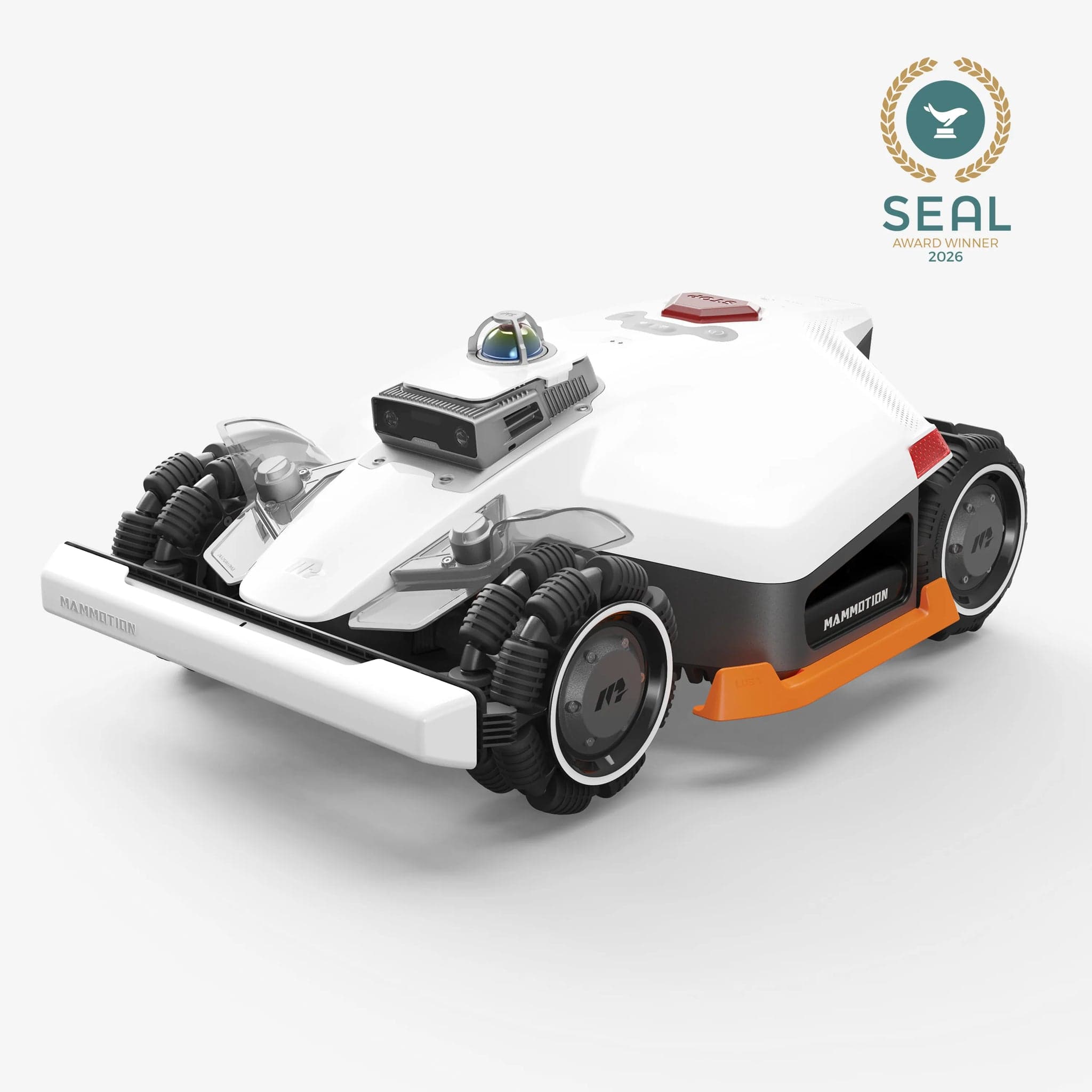
Mammotion
LUBA 3 AWD 3000H
Big slope rating, hybrid navigation, and 50-zone management make it the early benchmark for demanding yards.
Score91/100
$2,2990.75 acres80% slope
HYBRIDAWD
ReviewBrand hub
Mammotion robot mowers compared: LUBA 3 AWD, LUBA mini AWD and YUKA mini 2, ranked by MowScout Score with specs on slope, area, drive and navigation for 2026.
Check Yard FitBy MowScout EditorialUpdated 2026-07-01How we scoreHow we test
Quick answer: Mammotion is the brand to shortlist when your yard is steep, large, or complicated. Its all-wheel-drive LUBA 3 AWD 5000H is the highest-scoring mower in our entire database (MowScout Score 97), and the wider LUBA line stacks genuine AWD, an 80% slope rating, and redundant "tri-fusion" navigation against terrain that stops most rivals cold. For small, flatter yards on a budget, the compact YUKA mini 2 covers the other end of the range. This hub is spec-verified and data-driven, not hands-on — we have not run every unit on your lawn, so every number here comes from manufacturer specs and our MowScout Score, and we flag where a figure is a rating rather than a measurement. Street prices are mid-2026 estimates; verify the current price before you buy.
We track four Mammotion models across two product lines. Below we explain what separates LUBA from YUKA, put all four in one comparison table, name the best Mammotion for each kind of yard, dig into the navigation and warranty, and end with a plain "which one should you buy." If you want the category-wide context first, start with the pillar, robot lawn mowers: RTK vs LiDAR vs vision.
Most robot-mower brands are built around a small, flat, open lawn — rear-wheel drive, a modest slope rating, and a single navigation method. Mammotion built its reputation on the opposite yard: the steep bank, the tree-shaded acre, the property split into a front, a back, and a side that a sky-only system loses track of. That focus shows up in three specs that repeat across the LUBA line.
All-wheel drive. The three LUBA models — the 3000H, the 5000H, and the LUBA mini AWD — all use genuine AWD on four independently driven wheels, which is what lets them carry an 80% slope rating (about 38.7°). That is the top of the ladder in our database; rear-wheel-drive mowers typically top out near 30%, and standard AWD lands around 45–50%. Only the compact YUKA mini 2 steps down to RWD and a 45% rating, because it is aimed at flatter yards.
Sensor-fusion navigation. Rather than trust one positioning method, the LUBA 3 line fuses three — LiDAR, NetRTK satellite positioning, and AI vision — so that when trees or a roofline blank the satellite signal, the other two layers hold the mower's position. That redundancy is the reason Mammotion performs where sky-only navigation drifts. We break down exactly how that works further down this page.
Capacity and zones for real properties. The LUBA 3 5000H is rated to 1.25 acres across up to 50 mapped zones, and the 3000H to 0.75 acre across 30 zones. Large, segmented yards are the point, not an afterthought. For the whole large-lot picture, see our best robot mowers for large yards guide, where the 5000H is our number-one pick.
The trade-off is honest: this capability costs money, adds chassis size and weight (the LUBA 3 units are about 42 lb), and — like every robot mower — still leaves a thin trim strip at hard borders. On a small, flat lawn, a full LUBA is more mower than you need, which is exactly why the YUKA exists.
The single most useful thing to understand about Mammotion is that LUBA and YUKA are not tiers of the same mower — they are different tools.
LUBA is the AWD steep-and-large line. Every LUBA in our data drives all four wheels and is rated to an 80% grade. The line scales from the compact LUBA mini AWD (0.37 acre) up through the 3000H (0.75 acre) to the flagship 5000H (1.25 acre), but the DNA is constant: traction and redundant navigation for demanding yards. If your lawn has real slope, tree cover, or several separated areas, you are shopping the LUBA line.
YUKA is the compact, clipping-collection line. The YUKA mini 2 is rear-wheel drive, rated to 45% grade and a quarter acre, on a light 23 lb body. Its headline feature is DropMow — a clipping-collection system that gathers grass instead of only mulching it back into the lawn, which is genuinely useful if you dislike clippings on a manicured small yard. It still gets Mammotion's 360° LiDAR plus AI vision for obstacle avoidance and mapping, so it navigates well under partial tree cover; it just is not built to climb.
The clean decision rule: buy LUBA for slope and size, buy YUKA for a small, flatter yard where budget and a clean, clipping-free finish matter more than climbing a bank. The one place they overlap — a compact yard — is decided by grade, and that is exactly the LUBA mini AWD vs YUKA mini 2 question we settle below.
Every figure below is a manufacturer rating paired with the MowScout Score. Slope numbers are dry-condition ceilings — subtract headroom for wet grass. Prices are mid-2026 street estimates; verify before purchase.
| Model | Score | Price* | Max area | Max slope | Best for |
|---|---|---|---|---|---|
| LUBA 3 AWD 5000H | 97 | ~$2,699 | 1.25 ac | 80% (AWD) | Biggest, steepest, most-zoned lots |
| LUBA 3 AWD 3000H | 91 | ~$2,299 | 0.75 ac | 80% (AWD) | Best value for big, steep yards |
| LUBA mini AWD | 83 | ~$1,499 | 0.37 ac | 80% (AWD) | Small yards that are genuinely steep |
| YUKA mini 2 | 73 | ~$999 | 0.25 ac | 45% (RWD) | Budget compact yards + clipping collection |
\*Street estimates as of mid-2026, below official MSRP — confirm the current price before you buy. All four are wire-free, ship with a base station, and use satellite RTK as one navigation layer, so reserve a clear-sky spot for the base regardless of which model you choose.
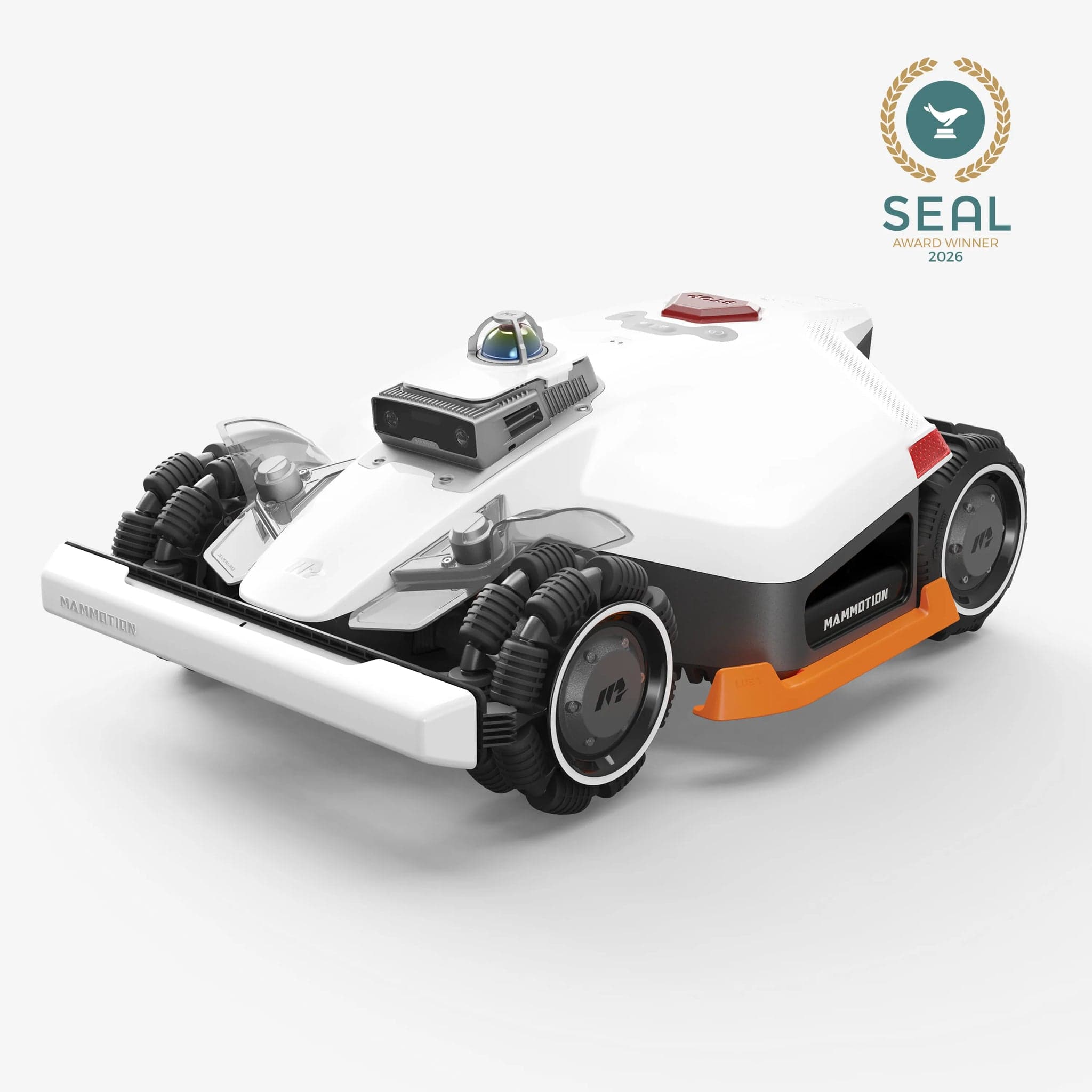
If your property is both big and steep, this is the one — and it is the highest-scoring mower we track at a MowScout Score of 97. It climbs a rated 80% grade on genuine AWD, covers 1.25 acres across up to 50 mapped zones, and runs the full tri-fusion navigation stack (LiDAR + NetRTK + AI vision) so it holds position near trees and buildings where sky-only systems wobble. That combination of slope, capacity, and zones is why it tops both our hills and large-yards rankings.
The honest caveats: it is a large, roughly 42 lb chassis at about $2,699, it wants a clear-sky spot for the RTK antenna, and — like every robot mower — it leaves a thin trim strip at hard borders. If your lawn is under about three-quarters of an acre, you are paying for capacity you will not use; size down to the 3000H and keep the identical climbing ability for less. Read the full LUBA 3 AWD 5000H review.
For most steep-yard buyers, the 3000H is the smart-money LUBA. It is the same 80% AWD platform and the same tri-fusion navigation as the 5000H, scaled to 0.75 acre and up to 30 zones for about $2,299 — a MowScout Score of 91. You lose area capacity, not hill capability: the drivetrain and slope rating are identical to our top pick, so a steep third- to three-quarter-acre yard gets the full Mammotion climbing story at a lower price.
The same caveats apply — it needs an antenna with clear sky, the chassis is large for a compact lawn, and edges want an occasional string-trimmer pass. But for the sweet spot of slope capability per dollar on a mid-to-large yard, this is the model we point most people toward. Step up to the 5000H only if you genuinely have 0.75–1.25 acres or need up to 50 zones. Read the full LUBA 3 AWD 3000H review.
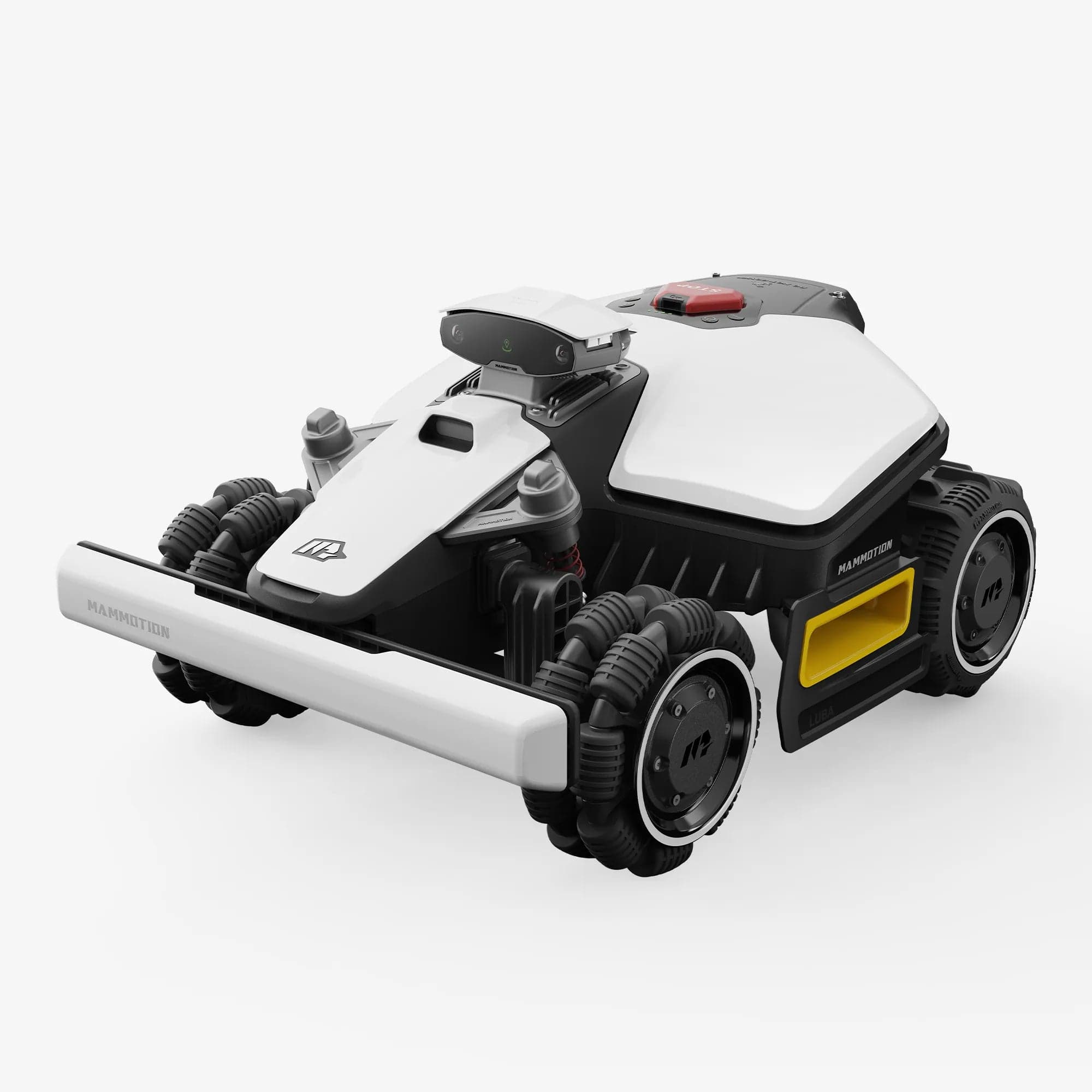
The LUBA mini AWD answers a question the rest of the market mostly ignores: what if my yard is small but truly steep? It carries the same 80% AWD slope rating as the full-size LUBA 3 line, plus LiDAR and dual-camera vision, in a compact 0.37-acre body for about $1,499 — a MowScout Score of 83, and the cheapest route in our database to the top of the slope ladder. High-torque motors also help it push through tall or thick grass that bogs down lighter compact mowers.
The trade-offs are real: capacity is modest for the price, edges are just okay, and its street price sits close enough to the larger 3000H that you should confirm the current price before you commit. But if you have a genuinely steep quarter- to third-acre lot, no other Mammotion — and few rivals — combine this much climbing ability with this small a footprint. Read the full LUBA mini AWD review.
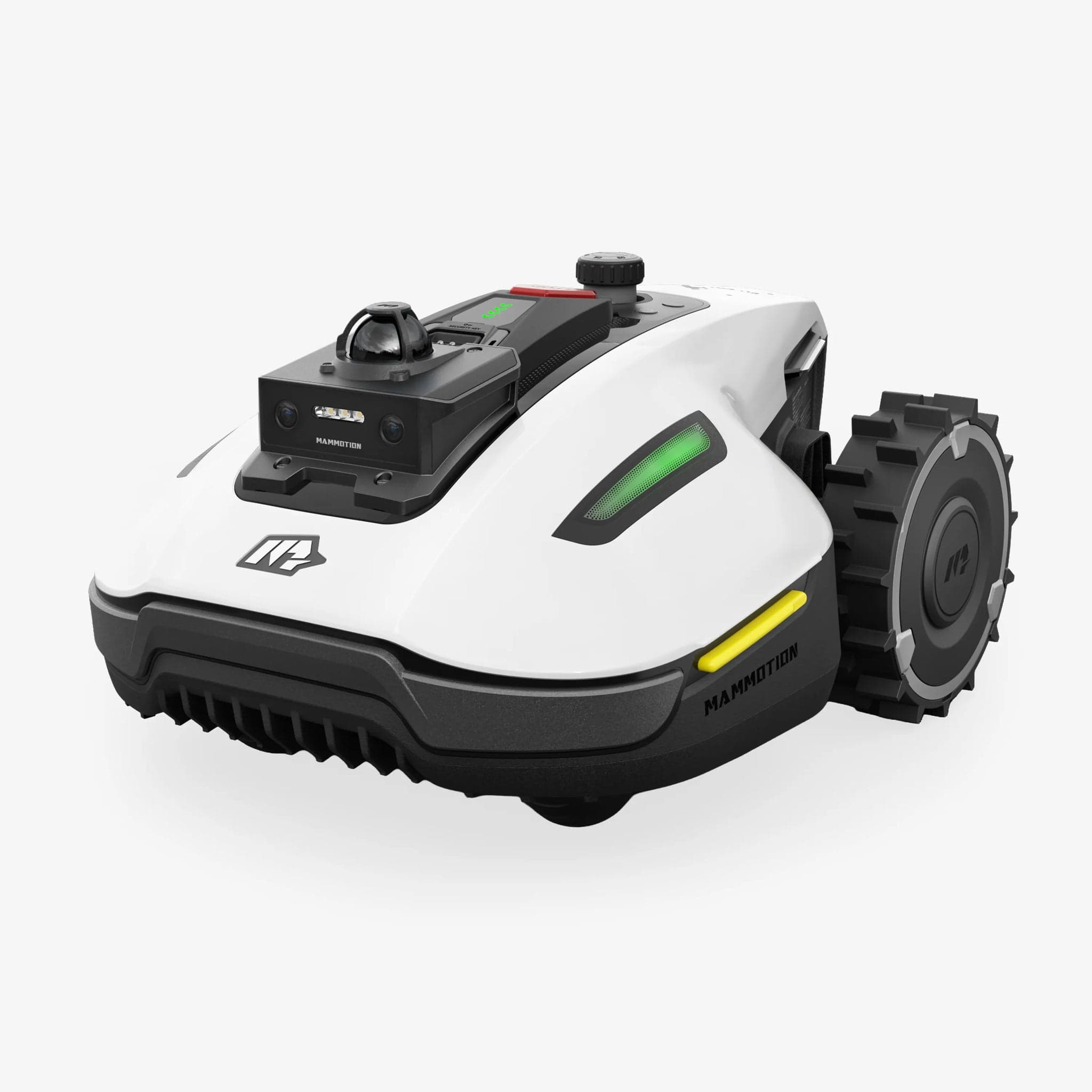
The YUKA mini 2 is the value entry into the Mammotion ecosystem — about $999 for a MowScout Score of 73. It pairs 360° LiDAR with AI vision so it navigates well under partial tree cover, packs the mapping into 15 zones, and adds the line's signature DropMow clipping-collection feature on a light 23 lb body that is easy to lift and store. For a small, shaded-to-open quarter-acre yard where you would rather bag clippings than mulch them, it is an easy, affordable pick.
Know its limits before you buy: it is rear-wheel drive and rated to 45%, so it is not a hill mower, and its quarter-acre capacity keeps it firmly in small-yard territory. Cut height also starts at 2.0 inches, so it is not built for very low Bermuda. If your compact yard is flat and clean-finish is the goal, the YUKA fits; if it is steep, step up to the LUBA mini AWD instead. Read the full YUKA mini 2 review.
Mammotion's biggest technical advantage on hard yards is that it does not depend on a single positioning method. The LUBA 3 line fuses three, and the whole point is redundancy:
delivered over 4G/Wi-Fi so you often skip a local antenna mast. It is accurate and efficient over long, straight passes — but only with a reasonably clear view of the sky.
shapes around it. Crucially, LiDAR does not care about sky view, so it carries the mower under tree canopy and beside structures where satellite signal drops out.
positioning reference.
When one layer is briefly blinded — the mower drives under a dense tree, past the corner of the house, along a fence — the other two keep it on track. That is why the LUBA 3 line holds its line on slopes near trees where a sky-only mower drifts or refuses to run. The compact LUBA mini AWD and YUKA mini 2 use a similar LiDAR-plus- vision-plus-RTK stack, so tree cover is a strength across the whole brand. If you want the deeper technical comparison of these methods, read our guide to RTK vs LiDAR vs vision.
The practical setup consequence is the same for every model: reserve a clear-sky spot for the base station. Sensor fusion makes Mammotion forgiving of intermittent signal loss, but the RTK correction source still wants open sky, and that placement is the single most important decision on install day.
Warranty is one of the quieter reasons the LUBA 3 flagships earn their price. Here is how coverage breaks down across the line:
| Model | Warranty | Retail availability |
|---|---|---|
| LUBA 3 AWD 5000H | 3 years | Mammotion, Amazon |
| LUBA 3 AWD 3000H | 3 years | Mammotion, Amazon |
| LUBA mini AWD | 2 years | Mammotion, Amazon, Best Buy, Lowe's, Home Depot |
| YUKA mini 2 | 2 years | Mammotion, Amazon |
The 3-year term on the LUBA 3 line is longer than the 2 years most rivals offer, and that matters more than it looks on a robot mower. The battery pack is the wildcard on any lithium machine — capacity fades over years, and an out-of-warranty pack is the largest foreseeable repair — so an extra year of coverage is a genuine tie-breaker against similarly priced competitors. The compact LUBA mini AWD and YUKA mini 2 carry the more typical 2-year term.
On distribution, the LUBA mini AWD is the most broadly stocked, listed at Best Buy, Lowe's, and Home Depot in addition to Mammotion and Amazon, which makes returns and in-person support easier if that matters to you. The LUBA 3 units and the YUKA mini 2 are primarily Mammotion-direct and Amazon. Mammotion's app is one of the more mature in the category and took a significant update in 2026, but as with any connected mower, expect occasional firmware updates and a learning curve on your first mapping session.
Two caveats apply to the whole brand, and we would rather name them than gloss over them. First, edges are good, not perfect — the offset deck mows close, but a thin strip remains at walls and beds, so plan on an occasional trim. Second, 80% is a dry-grass ceiling, not a comfort zone; wet or slick turf lowers real traction on any mower, so leave 10–20% of slope headroom and schedule runs around heavy rain.
The decision comes down to two numbers — how big your yard is and how steep it is — plus your budget:
right call only if you genuinely have the acreage and zones to use it.
5000H for less money. This is the model most steep-yard buyers should actually get.
and the only compact Mammotion that truly climbs.
collection and a light body — just not for hills.
If your yard is small and flat and you do not care about clipping collection, be honest with yourself about whether you need Mammotion at all — a simpler vision-based mower may cost less. But the moment slope, tree cover, or multiple zones enter the picture, this is the brand that was engineered for exactly that yard.
Yard size and slope are only two of the constraints that decide the right robot mower — tree cover, number of zones, cut height, and budget all interact. This hub ranks Mammotion against itself; your yard is more specific than that.
Find your robot mower → answer a few questions about your yard and get your top matches
The configurator screens your exact grade, area, tree cover, and budget against every model we track — Mammotion and its rivals — so you neither overbuy a 1.25-acre flagship for a gentle slope nor under-buy an RWD mower for a hill it cannot climb. For more context, compare Mammotion against the field in our best robot mowers for hills and large yards guides, or start from the robot lawn mowers pillar.
Mammotion
Big slope rating, hybrid navigation, and 50-zone management make it the early benchmark for demanding yards.
Mammotion
The 1.25-acre version stretches the same hybrid AWD platform into true large-lot territory.
Mammotion
True AWD to 80% slopes with LiDAR plus dual-camera vision in a compact 0.37-acre body — steep-yard capability without a full-size LUBA.
Brand reputation matters only after the mower fits the lawn. Check the exact acreage, slope rating, navigation system, zone support, warranty, current price, and retailer SKU before using any deal box.
Buyer questions
They are two different lines for two different yards. LUBA is the all-wheel-drive flagship family built for steep, large, or complex lots — the LUBA 3 AWD 3000H and 5000H and the compact LUBA mini AWD all carry genuine AWD and an 80% slope rating. YUKA is the compact, budget-friendly line: the YUKA mini 2 is rear-wheel drive, rated to 45% slopes and a quarter acre, and its signature trick is DropMow, which collects clippings instead of only mulching them. In short, buy LUBA for slope and size, buy YUKA for a small, mostly flat yard on a tighter budget.
Any of the three AWD models. The LUBA 3 AWD 5000H (MowScout Score 97) and 3000H (Score 91) are both rated to an 80% grade — about 38.7 degrees — on four independently driven wheels, and the compact LUBA mini AWD (Score 83) hits the same 80% rating in a smaller 0.37-acre body for about $1,499. The YUKA mini 2 is not a hill mower: it is rear-wheel drive and rated to 45%. Remember that 80% is a dry-grass ceiling, so leave headroom for wet or slick turf. See our full ranking on the best robot mowers for hills page.
No. Every current Mammotion model is wire-free — there is no perimeter cable to bury. Each one ships with a base/charging station and uses satellite RTK positioning as one navigation layer, so the single most important setup decision is reserving a spot with a reasonably clear view of the sky for the base. The LiDAR and camera layers keep the mower located when trees or a roofline briefly block the satellite signal, but you still want open sky for the correction source.
It varies by line. The LUBA 3 AWD flagships (3000H and 5000H) carry a 3-year warranty in our data — longer than the 2-year term most rivals offer. The compact LUBA mini AWD and the YUKA mini 2 carry a 2-year warranty. Across the board, the battery pack is the wildcard on any lithium mower: capacity fades over years, and an out-of-warranty pack is the largest foreseeable repair, so the longer LUBA 3 term is a genuine tie-breaker.
It depends entirely on your slope. The LUBA mini AWD costs roughly $500 more (about $1,499 vs $999) and buys you two things the YUKA cannot match: true all-wheel drive and an 80% slope rating instead of the YUKA's rear-wheel drive and 45% ceiling. If your compact yard is steep, the mini AWD is the only right answer. If your yard is small and mostly flat, the YUKA mini 2 saves money and adds the DropMow clipping-collection feature, which the LUBA mini does not have.
Street prices in our data run from about $999 for the YUKA mini 2, to roughly $1,499 for the LUBA mini AWD, about $2,299 for the LUBA 3 AWD 3000H, and around $2,699 for the flagship LUBA 3 AWD 5000H. Those are mid-2026 street estimates below the official MSRPs — always verify the current price before buying, because this category discounts weekly and Mammotion runs frequent promotions.