Affiliate disclosure: MowScout may earn a commission when you buy through our links. Recommendations are based on yard fit, verified specs, and score methodology; commission can only break close ties among genuine fits.
Quick answer: the Mammotion LUBA 3 AWD 3000H is our top pick for wet grass and rainy climates, with a MowScout Score of 91. It pairs genuine all-wheel drive with tri-fusion navigation (LiDAR + NetRTK + AI vision) that holds position in the overcast, low-light, damp conditions where pure-vision mowers get lost, an IPX6-sealed body, and a built-in rain-detection system that parks the mower until the grass dries. This page is spec-verified and data-driven, not hands-on — we have not run a unit through a monsoon on your lawn, so every number comes from manufacturer specs, our MowScout Score, and cited sources, and we say so wherever a claim is a rating rather than a measurement.
Here is the honest core, up front: no robot mower loves wet grass. Not one. Cut quality drops, clippings clump, and — the part that actually gets mowers stuck — traction falls, most dangerously on a wet slope. The right mower for a rainy climate is not one that magically cuts wet grass well; it is one that keeps its footing, protects its electronics, and is smart enough to wait for a dry window. Prices below are street estimates as of mid-2026; verify the current price before you buy, because this category discounts weekly.
The short answer: our top pick, and the honest caveat
For a wet climate with any real slope, the LUBA 3 AWD 3000H is the mower we'd buy. It is the mainstream version of Mammotion's flagship platform: the same 80% AWD drivetrain and tri-fusion navigation as the larger LUBA 3 AWD 5000H (Score 97), scaled to 0.75 acres for less money. AWD is what keeps it moving when the turf is slick, and the LiDAR-plus-RTK navigation is what keeps it located when the sky is grey and the camera would otherwise struggle. It is marked wet-grass-ok in our data, and Mammotion rates the LUBA 3 line to IPX6 with automatic rain detection that returns it to the dock and resumes once conditions dry out. (Mammotion)
The honest caveat applies to every pick on this page: a wet slope rating is not a dry slope rating. Buy AWD or 4WD, size the area to your yard, and then plan to schedule around the heaviest rain rather than trust a weather-resistance badge to do the work. If you want the whole picture of how these navigation systems differ, start with the pillar, robot lawn mowers: RTK vs LiDAR vs vision, then come back for the wet-climate ranking.
Why wet grass is the hardest condition for a robot mower
Rain and dew attack a robot mower on four fronts at once, and only one of them is about waterproofing.
1. Traction falls — this is the real danger. Wet grass and damp soil are slippery, and a robot mower is a light machine driving on small wheels. On flat ground that means the occasional wheel slip; on a slope it means the mower slides, spins, or beaches itself. Every manufacturer that publishes a slope rating measures it on dry turf, so a mower rated to 80% grade can lose grip well below that number the moment the hill is wet. This is why a wet slope is the single most dangerous condition for a robot mower, and why traction — not water resistance — is the spec that should drive a rainy-climate purchase. Leave 10-20% of headroom below your measured grade for wet conditions.
2. Cut quality drops. Wet blades of grass bend and lie down rather than standing up to meet the cutting disc, so the mower glides over some of them and tears others instead of slicing cleanly. The result is a ragged, uneven finish and torn tips that brown and invite disease — the same reason lawn pros tell you to wait for the grass to dry. (ECOVACS)
3. Clumping and buildup. Wet clippings stick together and cling to the blades, the deck, and the undercarriage, leaving clumps on the lawn and packing the housing with a wet mat that has to be cleaned off. A good IPX6 mower lets you rinse that out with a hose, but the clumping still costs you cut quality in the moment. (Mammotion)
4. Navigation gets harder in the wet and the grey. Rainy climates mean overcast skies, low light, and damp mornings — exactly the conditions in which pure-vision mowers struggle to see. Cameras need light and contrast; a satellite-only system needs clear sky. The mowers that cope best in a wet climate are the ones with redundant navigation (LiDAR plus RTK plus vision), because when one sensor is compromised by weather, the others carry it.
What we prioritized for wet and rainy climates
The MowScout Score is a weighted composite. For a wet-climate list we lean on the parts of it that survive a rainy morning, and we rank the picks on three things, in order:
Drivetrain and traction. AWD or 4WD is the floor for any yard that is not dead flat. Wet grass is where
RWD fails first, so rear-wheel-drive models are excluded from the ranked picks below no matter how well they score overall — traction is the whole point in the rain.
Weather resistance (IP rating). We want IPX6/IP66-class sealing so the electronics survive downpours
and a hose-down. Every ranked pick clears that bar. Weather sealing does not improve the cut or the grip, so we treat it as a gate, not a tiebreaker.
Rain handling and navigation redundancy. A built-in rain sensor that pauses and resumes, plus scheduling,
keeps the mower off the lawn during the worst of it. Redundant LiDAR/RTK/vision navigation keeps it located when a wet, grey sky would blind a camera-only system.
Everything below is grounded in `data/mowers.json` and the MowScout Score, with IP and rain-handling facts cited to the manufacturer. We have not measured a wet climb ourselves; where we say "rated," we mean the manufacturer's number, verified against a listing.
The best robot mowers for wet grass and rainy climates, ranked
This list is ordered by best fit for wet and rainy conditions — AWD/4WD traction, weather sealing, and navigation that copes with low light — not by raw MowScout Score alone. We show the Score for each so you can see the trade-offs.
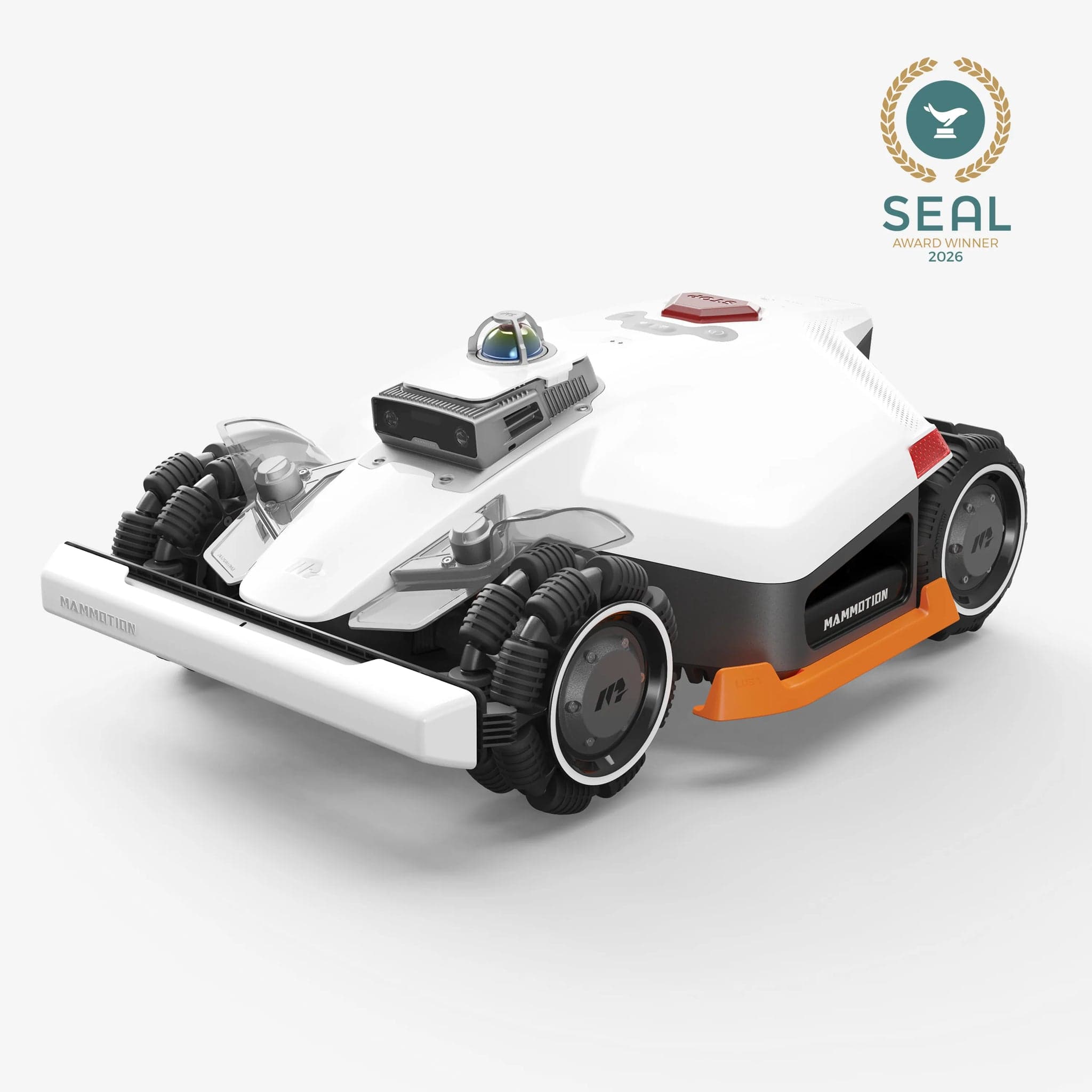
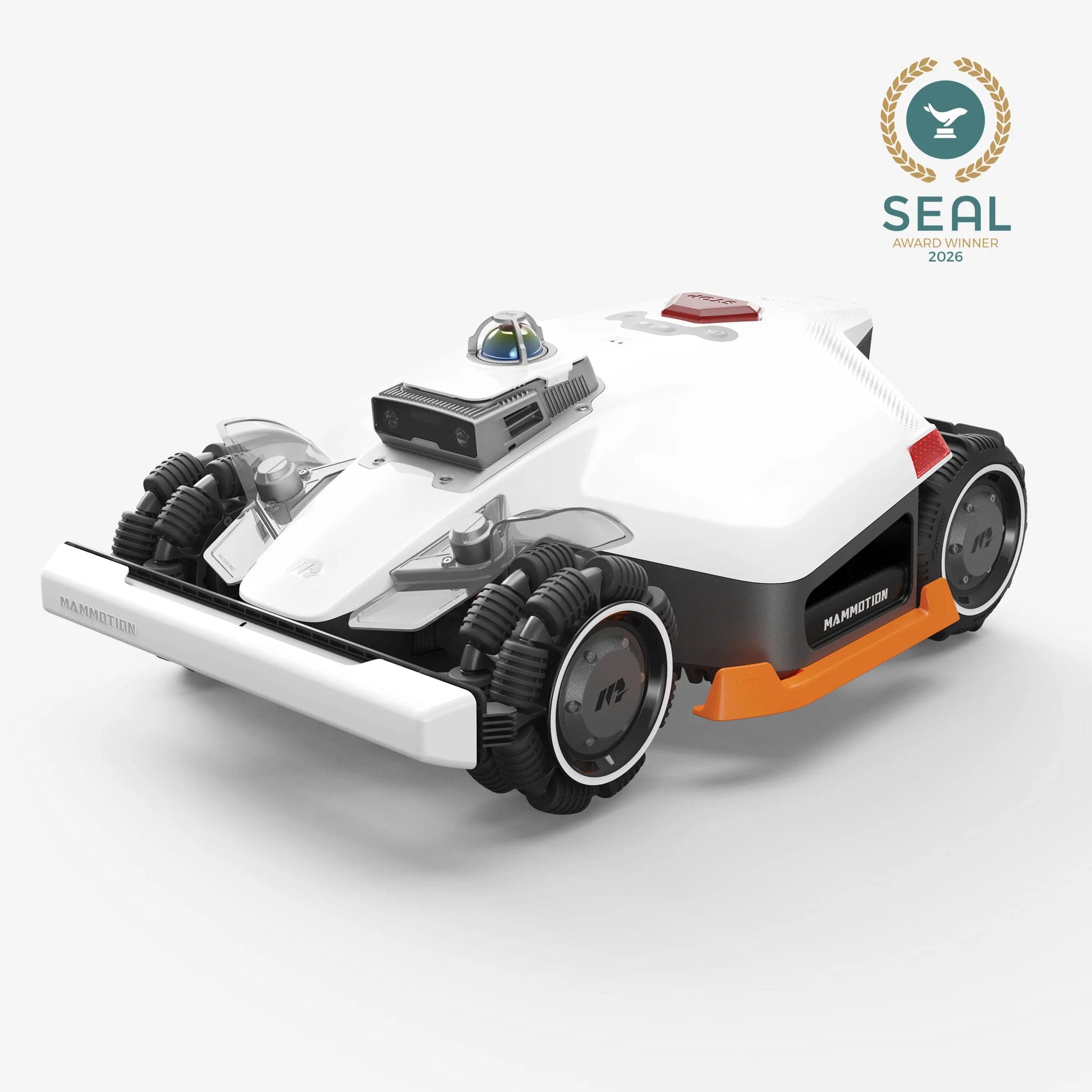
1. Mammotion LUBA 3 AWD 3000H — MowScout Score 91
Mammotion LUBA 3 AWD 3000H robot lawn mower
The wet-climate pick most buyers should get. It combines genuine AWD traction with an 80% dry-rated slope, 0.75 acres of capacity, and Mammotion's tri-fusion navigation (LiDAR + NetRTK + AI vision), which is the single most weather-resilient positioning stack in our database — when a grey sky dims the camera or trees block the antenna, the other sensors keep it on course. It is marked wet-grass-ok in our data, rates to IPX6, and includes rain detection that docks the mower and resumes once the grass dries. (Mammotion) Honest caveats: it still wants a clear-sky spot for the RTK antenna, the ~42 lb chassis is large for a compact lawn, edges want an occasional trim, and — like every mower here — its 80% slope is a dry number you should derate for wet grass. For a wet, sloped third- to three-quarter-acre yard, this is the sweet spot. Read the full review.
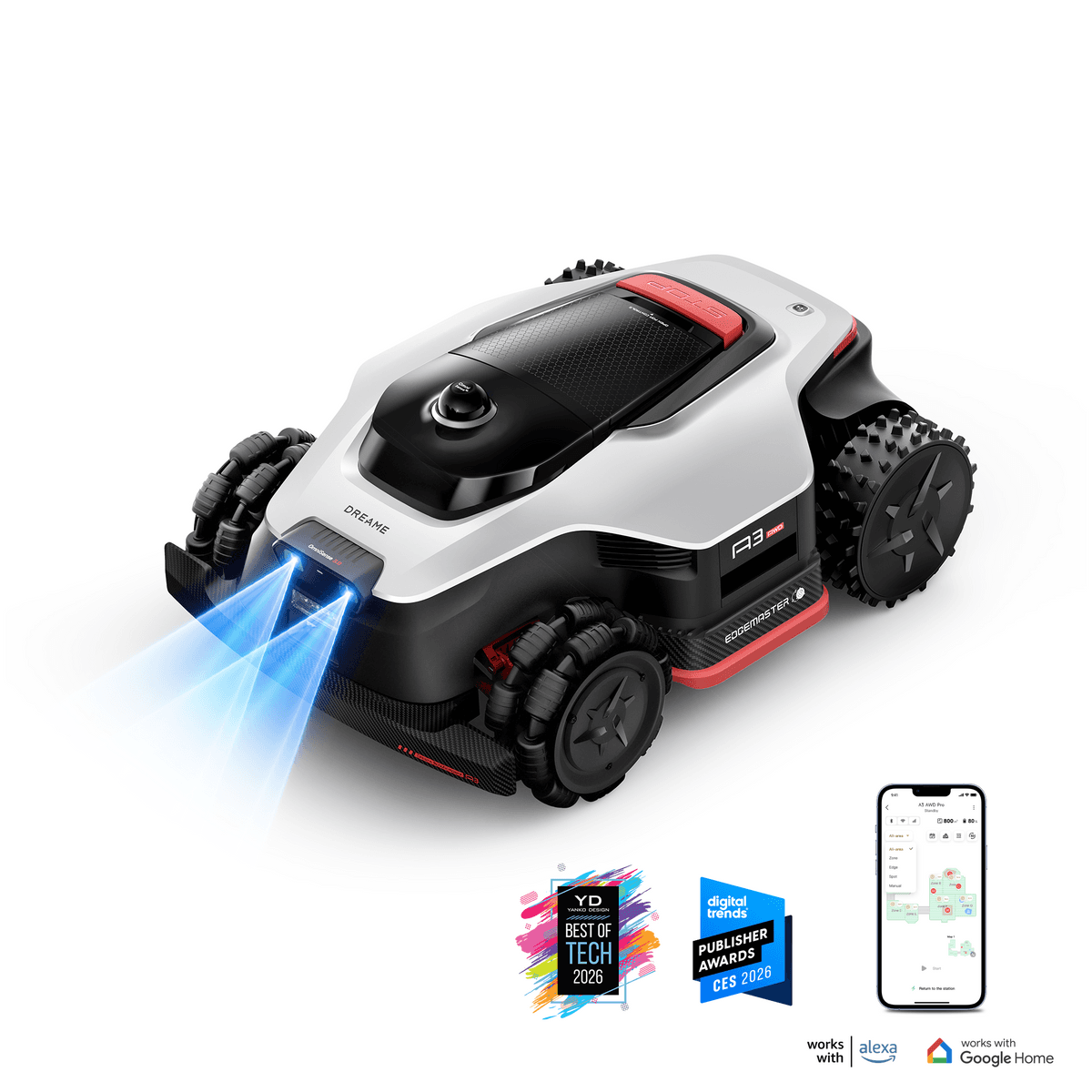
2. Dreame A3 AWD Pro 3500 — MowScout Score 90
Dreame A3 AWD Pro 3500 robot lawn mower
The maximum-traction pick, and the one to buy if wet slopes are your worst problem. The A3 AWD Pro is the only 4WD model in our data — four driven wheels put more rubber to slick turf than any AWD rival — rated to an 80% grade, with LiDAR-plus-vision navigation that needs no RTK antenna and copes with low light better than a camera-only system. A wide 15.8-inch dual-disc deck covers up to 0.87 acres fast and trims close, it is marked wet-grass-ok, and Dreame rates it to IPX6 with weather detection that returns it to the dock in rain, snow, or frost and resumes when conditions improve. (Dreame) Caveats: at about $2,999 it is the most expensive pick here, and at that price it has to justify itself against the more mature LUBA app and support. If your rainy yard is steep, the 4WD is worth the premium. Read the full review.
3. Mammotion LUBA 3 AWD 5000H — MowScout Score 97
Mammotion LUBA 3 AWD 5000H robot lawn mower
The highest-scoring mower we track, and the wet-climate answer for a large lot. It is the identical 80% AWD platform and tri-fusion navigation as our top pick, stretched to 1.25 acres across up to 50 mapped zones, with the same IPX6 sealing and rain detection. Its 97 score reflects overall capability; for wet performance specifically, the differentiator over the 3000H is capacity, not grip — so we rank it here as the pick for big wet properties rather than the default. Caveats: at about $2,699 and ~42 lb it is more mower than a compact yard needs, and it still wants clear sky for the antenna. If your rainy lot is both big and sloped, nothing here covers more ground with more traction. Read the full review.
4. Segway Navimow X350 — MowScout Score 85
Segway Navimow X350 robot lawn mower
The large open-lawn wet pick. The X350 brings AWD traction, quiet ~60 dB operation, and night-capable vision to as much as 1.5 acres, with IP66-class sealing and a rain sensor you can toggle on to send it home when the weather turns. (Navimow) The important caveats are two: it is rated to a 50% grade, not 80%, so it is for rolling and moderately sloped terrain rather than the banks the LUBA and Dreame handle; and its positioning is sky-dependent, which is a real limitation in a wet climate where overcast is common and dense tree cover blocks signal. For a big, open, moderately hilly property in the rain, it covers ground the compact flagships can't. Read the full review.
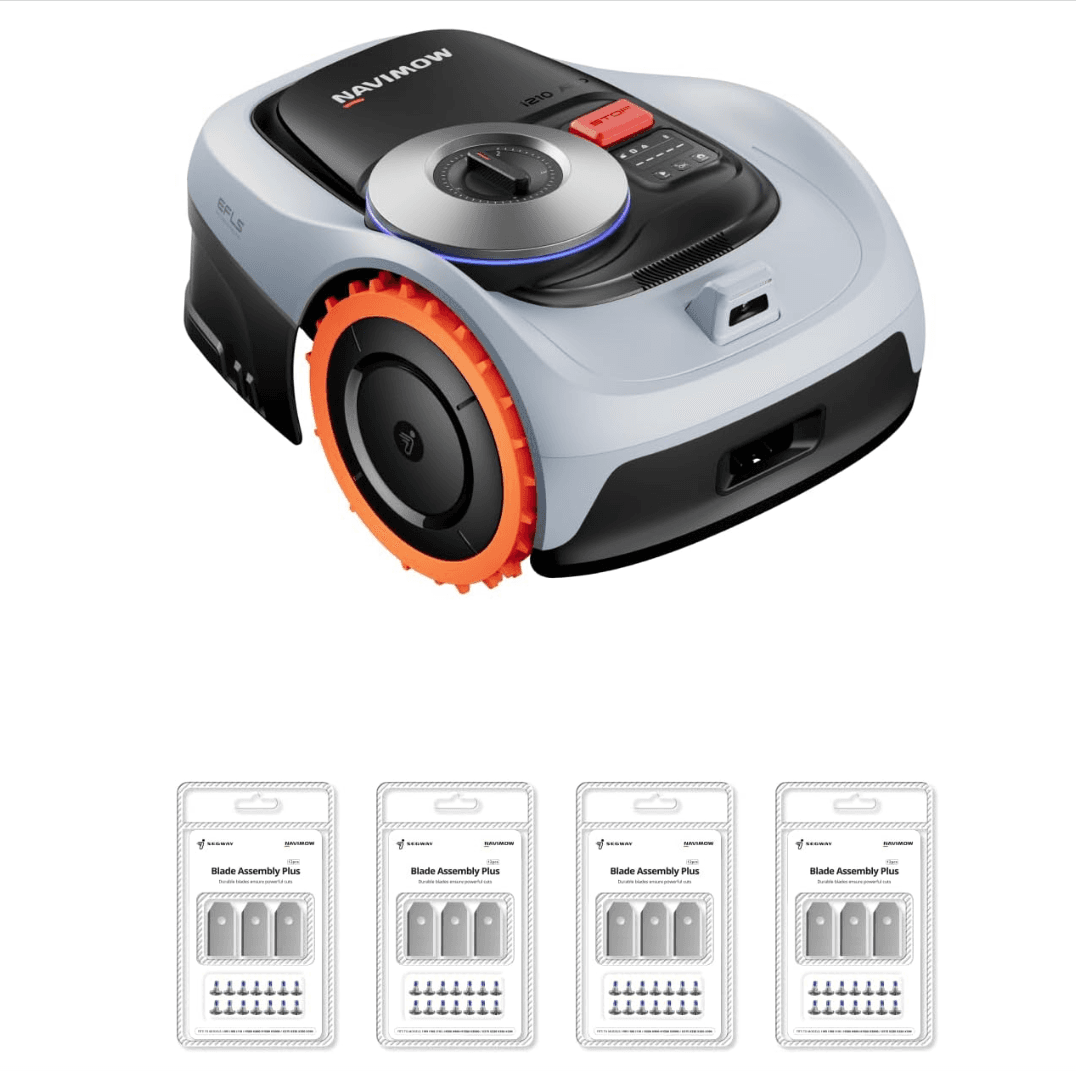
5. Segway Navimow i210 AWD — MowScout Score 67
Segway Navimow i210 AWD robot lawn mower
The budget AWD pick for a small, wet yard. At about $1,199 the i210 AWD is one of the cheapest ways to get genuine all-wheel-drive traction, which is exactly what a damp lawn needs. It handles a 45% grade, covers a quarter acre, and is marked wet-grass-ok with the same rain-sensor and weather-sealed hardware as the Navimow line. Caveats: it leans on NetRTK positioning that wants clear sky — a weaker fit under the dense, overcast canopy of a rainy climate — its capacity tops out at 0.25 acre, and its edges are good-not-great. For a small yard with moderate slopes and reasonable sky view, it is the value traction play; for anything steeper, larger, or heavily wooded, spend up. Read the full review.
Wet-climate specs at a glance
Every figure below is a manufacturer rating verified against a listing, paired with the MowScout Score. The "Wet grass?" column is our `wetgrassok` data flag; slope numbers are dry-condition ceilings — subtract 10-20% for wet turf, and treat RWD models as flat-only in the rain.
An IP ("Ingress Protection") rating has two digits: the first is dust resistance, the second is water. When a brand quotes IPX6, the X means dust wasn't formally tested; the 6 is the part that matters — the body withstands powerful water jets from any direction. In plain terms, an IPX6 or IP66 mower shrugs off heavy rain and a garden-hose rinse, but it is not built for submersion, and you should skip high-pressure washers. Across the mowers we track, IPX6/IP66 is effectively the category standard: Mammotion's LUBA 3, Dreame's A3, ECOVACS' GOAT line, and Segway's Navimow all publish it. (Navimow)
Here is the trap: a strong IP rating tells you the electronics will survive the rain — it tells you nothing about whether the mower will keep its footing or cut cleanly on wet grass. Those come from the drivetrain and the blade, not the seals. So use the IP rating as a gate every serious wet-climate mower must clear, then make your actual decision on traction and navigation.
The RWD and vision trap: what to avoid in a wet climate
Two kinds of mower look fine on a spec sheet and disappoint in the rain.
Pure-vision mowers. The Eufy E15 and E18 navigate entirely by camera. Cameras need light and contrast, so overcast skies, dusk mowing, and heavy wet all degrade how well they see — and Eufy itself positions these as flat-lawn mowers not ideal for dense, wet grass. They are the only models in our database flagged `wetgrassok: false`. In a rainy climate, where grey mornings are the norm, a pure-vision system is fighting the weather every run. Choose LiDAR or RTK redundancy instead.
Well-sealed but RWD. The ECOVACS GOAT line is a useful cautionary example: it carries an excellent IPX6 rating and even resumes automatically about three hours after the rain stops, so on paper it reads like a rain champion. (ECOVACS) But every GOAT is rear-wheel drive, so its traction on wet turf is limited regardless of how waterproof it is. On a flat yard, a well-sealed RWD GOAT is a perfectly reasonable wet-climate mower with genuinely clean edges. On any slope in the rain, it is the wrong tool — the seals keep the electronics dry while the wheels slip. The lesson: do not let an IP rating substitute for a drivetrain. In a wet climate with slopes, require AWD or 4WD first, then check the IP rating.
Schedule around the rain, don't muscle through it
The best wet-climate strategy is not a mower that bulldozes through a downpour — it is one that mows often, in dry windows, and steps aside for the worst of the weather. Robot mowers are built for exactly this: they cut a little every day, so they never face the tall, soaked, overgrown lawn that a weekly gas mower does.
Turn the rain sensor on. Nearly every model here includes one. It pauses the job, sends the mower to the
dock when it detects rain, and resumes once the grass dries — ECOVACS, for instance, waits roughly three hours after the rain stops. That single feature prevents most wet-grass clumping and slope slips.
Mow in the driest window. In many climates the lawn dries by early-to-mid afternoon; schedule the main run
then rather than through dewy mornings. After a light shower, grass often needs 3-5 hours to dry; after a heavy storm, wait longer. (Mammotion)
Raise the deck in wet stretches. A slightly higher cut reduces strain and clumping and gives a more even
finish when the grass won't stand up.
Derate the slope and add no-go zones. Keep the mower off the steepest wet sections by mapping turns onto
flatter ground, and leave 10-20% of slope headroom for moisture.
For a deeper walkthrough of running a mower in a wet climate — drying times, sensor behavior, and blade care — see our companion guide, can robot mowers cut wet grass?.
Find your match
Wet grass is only one constraint, and it interacts with everything else — slope, yard size, tree cover, and budget all change the answer. This page ranks by wet-and-rainy fit; your yard is more specific than that.
The configurator screens your exact grade, area, tree cover, and budget against all 21 models we track, so you don't overbuy a 4WD flagship for a flat, drizzly lawn — or under-buy a pure-vision RWD mower for a wet slope it can't hold. When you're ready to compare capability head-to-head, our hills ranking and large-yard ranking pick up where the weather leaves off.
Related mower reviews
Related pick #1
Mammotion LUBA 3 AWD 3000H
Score91/100
Mammotion LUBA 3 AWD 3000H belongs in Best Robot Mowers for Wet Grass & Rainy Climates (2026) because it combines HYBRID navigation, 0.75 acres of rated coverage, a 80% slope rating, 30 mapped zones, and a current street price of $2,299. AWD/4WD gives it extra traction margin. No separate antenna requirement reduces one setup variable.
Dreame A3 AWD Pro 3500 belongs in Best Robot Mowers for Wet Grass & Rainy Climates (2026) because it combines LIDAR navigation, 0.87 acres of rated coverage, a 80% slope rating, 20 mapped zones, and a current street price of $2,999. AWD/4WD gives it extra traction margin. No separate antenna requirement reduces one setup variable.
Segway Navimow i210 AWD belongs in Best Robot Mowers for Wet Grass & Rainy Climates (2026) because it combines NETRTK navigation, 0.25 acres of rated coverage, a 45% slope rating, 12 mapped zones, and a current street price of $1,199. AWD/4WD gives it extra traction margin. Plan the antenna or base placement carefully.
Robot mowers fail when a generic recommendation misses the hard constraint: slope, tree cover, separated zones, dock placement, or budget. Run the configurator before using any deal box.
Technically yes — most models in our database are rated to keep running in damp conditions, and several (the Mammotion LUBA 3 AWD line, the Dreame A3 AWD Pro, and the Segway Navimow AWD models) carry a wet-grass-ok flag. But 'can' is not 'should.' Wet grass bends instead of standing up, so the blade tears rather than slices, clippings clump and stick to the deck, and — most importantly — the wheels lose grip. Manufacturers themselves recommend mowing dry whenever possible. The honest answer: a good wet-climate mower keeps your lawn from getting out of control between dry windows; it does not cut wet grass as cleanly as dry.
Do I need AWD for a rainy climate, or is RWD fine?
On a genuinely flat lawn, a well-sealed rear-wheel-drive mower can cope in a wet climate. The moment you add any slope, AWD — or Dreame's 4WD — becomes a safety spec, not a luxury. Wet grass is exactly where RWD mowers slide, spin, and beach themselves, and a wet slope is the single most dangerous condition for a robot mower. Above roughly 30% grade in a rainy climate, treat AWD or 4WD as mandatory and derate the rated slope 10-20% for moisture.
What IP rating should a robot mower have for rain?
Look for IPX6 (or IP66) at minimum. IPX6 means the body withstands powerful water jets from any direction — enough for heavy rain and a garden-hose rinse, though not submersion. The Mammotion LUBA 3, Dreame A3, ECOVACS GOAT, and Segway Navimow lines all publish IPX6/IP66-class sealing. Remember that weather resistance protects the electronics; it does nothing for traction or cut quality, so treat the IP rating as a floor to clear, not the spec that decides your purchase.
Should I let it mow in the rain or schedule around it?
Schedule around it. Nearly every current mower includes a rain sensor that pauses the job and sends the unit home when it detects rain, then resumes after the grass dries — ECOVACS, for example, waits roughly three hours after the rain stops. Frequent short cuts in dry windows keep a lawn tidier than forcing one long cut through a downpour, and they spare traction, cut quality, and the deck. Lean on the rain sensor and smart scheduling instead of brute force.
Which robot mower is best for wet grass and slopes?
The Mammotion LUBA 3 AWD 3000H (MowScout Score 91, about $2,299) is our top wet-climate pick: genuine AWD to an 80% dry-rated grade, tri-fusion navigation (LiDAR + NetRTK + AI vision) that holds position in overcast, low-light, and wet conditions, IPX6 sealing, and built-in rain detection. For a large wet lot, step up to the LUBA 3 AWD 5000H (Score 97); for maximum raw traction, the 4WD Dreame A3 AWD Pro (Score 90) is the alternative. Whichever you choose, subtract 10-20% from the slope rating for wet turf.
Are Eufy vision mowers okay for a wet or rainy climate?
We'd steer clear. The Eufy E15 and E18 navigate purely by camera vision, which struggles in low light and heavy wet — and Eufy itself flags them as flat-lawn mowers that are not ideal for dense wet grass. In our data they are the only two models marked not okay for wet grass. In a rainy climate, where overcast skies and damp mornings are the norm, a pure-vision RWD mower is the wrong tool. Choose AWD with LiDAR or RTK redundancy instead.